Japanese Cheesecake

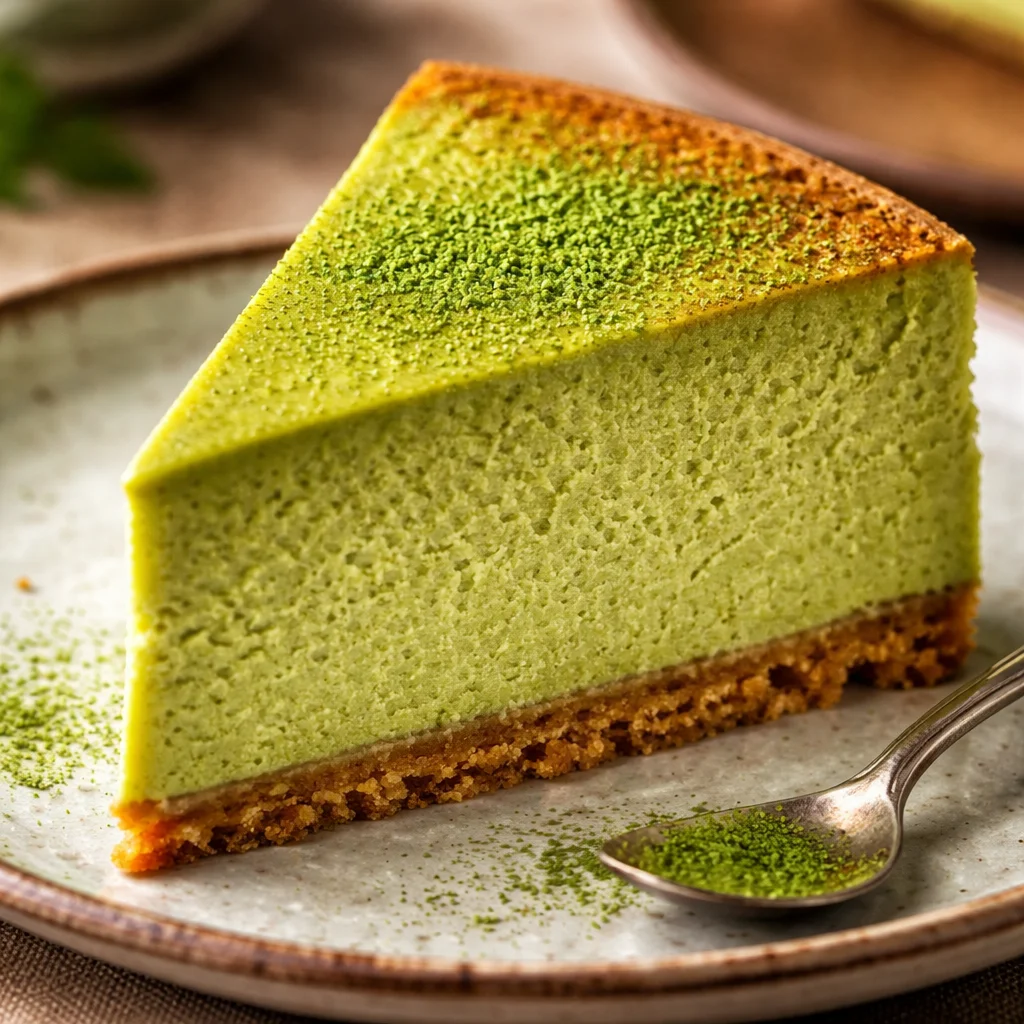
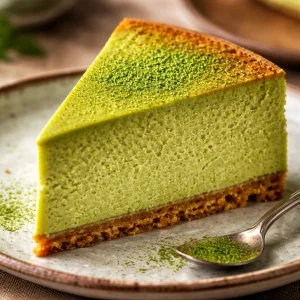
I’ve made this light, cloud-like matcha Japanese cheesecake more times than I can count — it’s the kind of dessert that looks elegant but is surprisingly forgiving. This version blends tangy cream cheese with a hint of bittersweet matcha for a green, airy cake that’s perfect for afternoon tea, special occasions, or when you want a dessert that feels both decadent and delicate.
What makes this recipe special
Japanese-style cheesecake is beloved for its feather-light texture: it’s part soufflé, part cheesecake. The batter relies on whipped cream and gently folded eggs to trap air, giving you that signature jiggle and melt-in-your-mouth finish. Using matcha adds a pleasant vegetal note and a visually striking color without overpowering the creamy base.
“Light as a cloud, subtle matcha bite, and always a showstopper — everyone asks for the recipe.”
This recipe is great when you want an elegant dessert without a dense, heavy finish. It’s ideal for afternoon gatherings, Mother’s Day, or a low-key dinner party. If you like other creative cheesecakes, you might enjoy my twist on an apple cider cheesecake for fall flavors — see that recipe here.
Reasons to try it
- Unbeatable texture: airy yet creamy, not dense like New York–style cheesecake.
- Visually impressive: the emerald matcha swirl makes a simple slice look fancy.
- Moderate time investment: about 90 minutes active cook time plus chilling.
- Versatile: serve plain, dusted with powdered sugar, or topped with fruit and cream.
I also like to pair technique ideas from other hybrid desserts for texture inspiration — for a fun mash-up, check out this baklava cheesecake cookies idea I referenced when experimenting with layered textures: baklava-cheesecake cookies.
Step-by-step overview
Before we dive into ingredients, here’s what you’ll do at a glance:
- Soften and smooth the cream cheese base.
- Add sugar, milk, and matcha to flavor and thin the batter.
- Incorporate eggs one at a time for structure.
- Whip the heavy cream to soft peaks and fold it in to create lift.
- Sift cornstarch and cream of tartar to stabilize and prevent lumps.
- Bake the batter in a water bath until set but still slightly jiggly.
- Chill thoroughly for clean slices and best texture.
If you want more control over the final texture, you can compare steps with classic cheesecake techniques in a detailed guide I use as a reference: best cheesecake technique.
What you’ll need
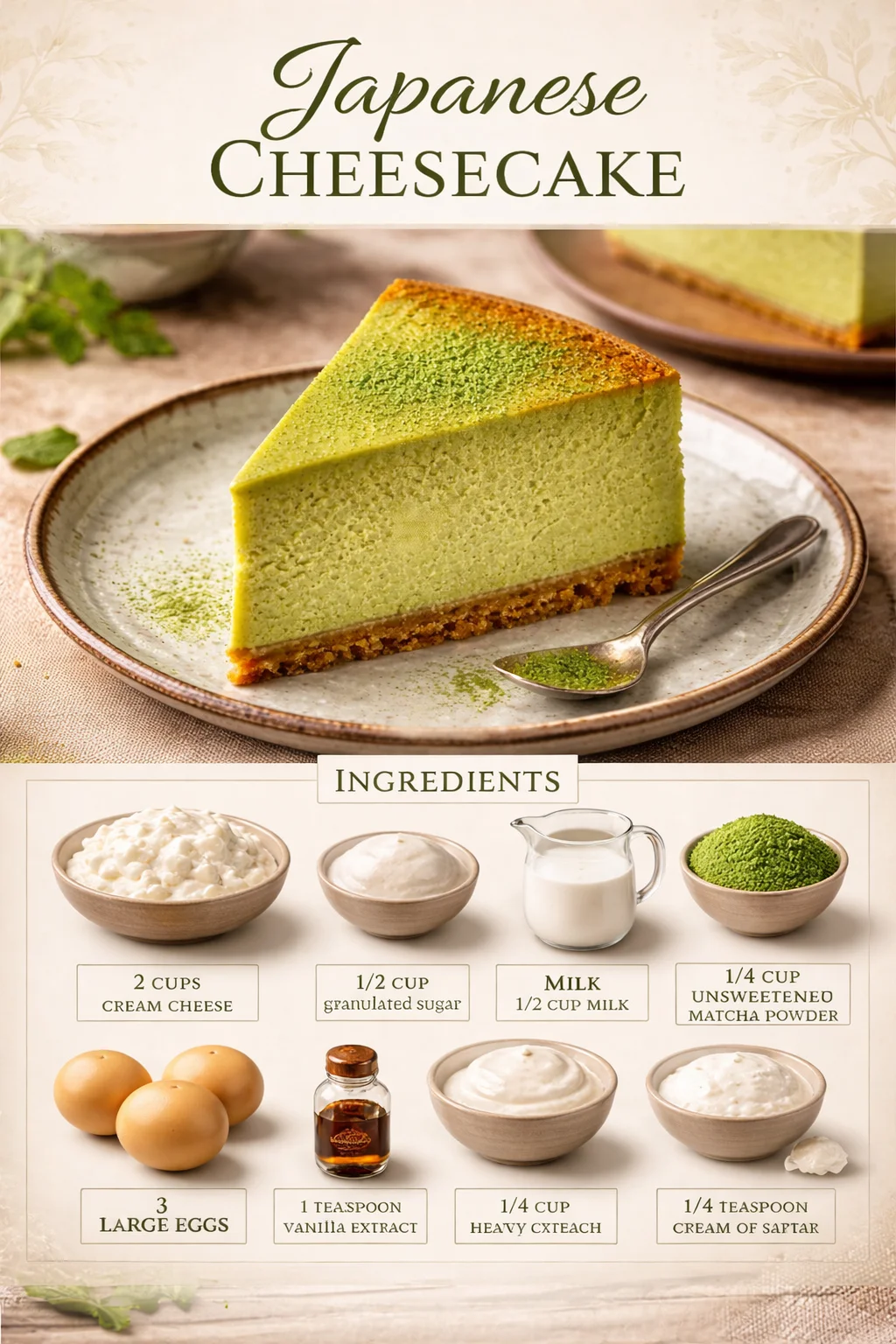
- 2 cups (about 450 g) cream cheese, softened to room temperature
- 1/2 cup (100 g) granulated sugar
- 1/2 cup (120 ml) milk, room temperature
- 1/4 cup unsweetened matcha powder (sifted to avoid clumps)
- 3 large eggs, separated (whites and yolks)
- 1 teaspoon vanilla extract
- 1/2 cup (120 ml) heavy cream, chilled
- 1/4 cup (30 g) cornstarch, sifted
- 1/4 teaspoon cream of tartar
Notes and substitutions:
- For a milder green hue, reduce matcha to 2 tablespoons. If you want a deeper flavor, use ceremonial-grade matcha sparingly.
- Softened, not melted, cream cheese gives the best texture.
- If you don’t have cream of tartar, you can use a pinch of salt and 1/2 teaspoon lemon juice to help stabilize the egg whites, though results may vary.
- For a dairy-free version, experiment with full-fat vegan cream cheese and whipped aquafaba, but expect some texture differences.
Directions to follow
- Preheat your oven to 320°F (160°C). Grease a round cake pan (8–9 inch) and line the bottom and sides with parchment paper.
- Beat the softened cream cheese in a bowl until smooth and lump-free. Scrape the sides often.
- Gradually add the sugar, then pour in the milk and sifted matcha. Mix until fully combined and evenly colored.
- Add the egg yolks one at a time, mixing after each addition. Stir in the vanilla extract. The batter should be smooth and slightly pourable.
- In a separate chilled bowl, whip the heavy cream until soft peaks form. Stop when the cream holds a soft tip; don’t overwhip.
- Gently fold the whipped cream into the cream cheese mixture with a rubber spatula. Use broad, gentle strokes to preserve air.
- Sift the cornstarch and cream of tartar over the batter and fold just until combined. Avoid overmixing.
- Pour the batter into the prepared pan and smooth the surface with an offset spatula. Tap the pan lightly to release any large air bubbles.
- Prepare a water bath: place the cake pan inside a larger roasting pan. Pour hot (not boiling) water into the outer pan until it reaches about halfway up the cake pan sides. This regulates temperature and keeps the cake moist.
- Bake for about 60 minutes. The surface should be lightly golden and the center will still jiggle slightly under gentle movement. If the top browns too quickly, tent with foil.
- Turn the oven off with the door ajar and let the cake cool inside for 15–20 minutes to prevent sudden shrinkage. Remove from the water bath, cool to room temperature, then refrigerate for at least 4 hours (overnight is best) before slicing.
Serve chilled for clean slices. If you need a slicing tip: warm a knife under hot water, wipe dry, and slice in a single smooth stroke for the best presentation.
Best ways to enjoy it
- Dust lightly with powdered sugar or sift an extra pinch of matcha on top.
- Serve with a dollop of lightly whipped cream and a few fresh berries to cut the richness.
- Pair slices with a cup of green tea or a mild black tea; the tea echoes the matcha notes.
- For a dessert spread, offer small slices alongside fruit tarts or a citrus sorbet to provide a bright contrast.
Storage and reheating tips
- Refrigeration: Keep leftovers covered in the fridge for up to 3–4 days. Wrap the cake with plastic wrap or store in an airtight container to prevent drying and odor transfer.
- Freezing: Wrap individual slices tightly in plastic wrap and place in a freezer bag. Freeze up to 1 month. Thaw in the fridge overnight. Texture may soften slightly after freezing.
- Reheating: This cheesecake is best served cold; if you prefer it slightly warmer, let a slice sit at room temperature 15–20 minutes before serving. Avoid microwaving — it can cause weeping and texture loss.
- Food safety: Because the cake contains eggs and dairy, keep it refrigerated at all times and discard if left out over 2 hours at room temperature.
Helpful cooking tips
- Bring dairy and eggs to room temperature before starting. This prevents lumps and makes for a silkier batter.
- Sift matcha and cornstarch to avoid gritty pockets of powder.
- Fold — don’t beat — the whipped cream into the batter. Overmixing deflates the air you’ve worked to incorporate.
- Use a thermometer if you like precision: the center should register about 150–160°F (65–71°C) when set but still a bit creamy.
- To reduce cracking, avoid rapid temperature changes; the cool-down-in-oven step helps. For more texture inspiration and troubleshooting, I often compare notes with technique guides like this cheesecake technique reference.
Recipe variations
- Plain vanilla: omit matcha and add 1 tablespoon lemon zest for brightness.
- Chocolate swirl: fold in 2–3 tablespoons melted dark chocolate into half the batter and swirl before baking.
- Citrus-matcha: add 1 teaspoon yuzu or lemon zest for a fragrant lift.
- Lighter version: swap half the cream cheese for full-fat Greek yogurt, but expect a tangier, slightly looser texture.
- Vegan experiment: use plant-based cream cheese, full-fat coconut cream whipped to soft peaks, and aquafaba for lift — results vary, so test a small batch first.
Helpful answers
Q: Why is my Japanese cheesecake not jiggly?
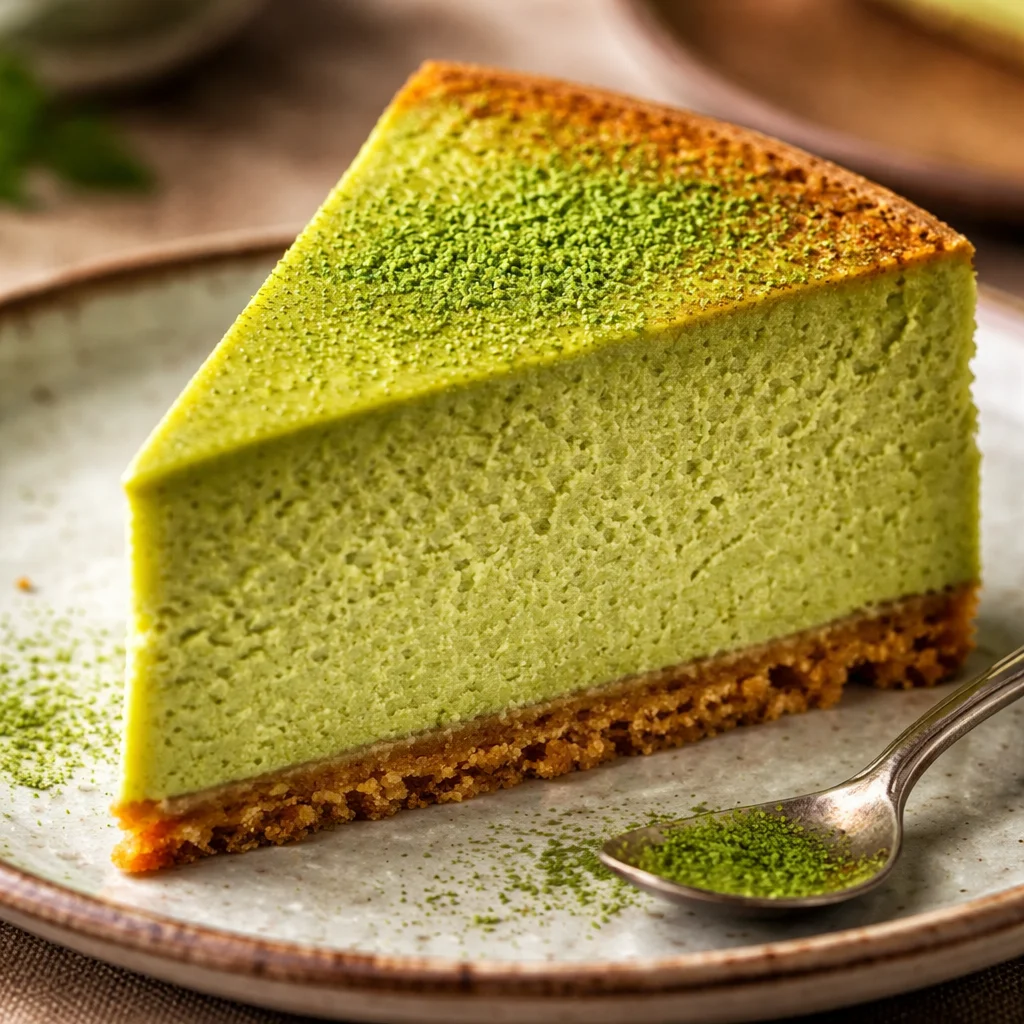
A: A properly baked Japanese cheesecake should be set at the edges with a slight jiggle in the center. If it’s fully firm, you may have overbaked it or under-whipped the cream/eggs. Reduce bake time by 5–10 minutes next time and check for a gentle wobble.
Q: Can I use powdered sugar instead of granulated?
A: You can, but powdered sugar contains cornstarch and will slightly change texture and sweetness. If you use it, reduce the amount by 10–15% and sift it well.
Q: Can I make this ahead for a party?
A: Absolutely. Make the cheesecake a day ahead and refrigerate. It benefits from overnight chilling, which improves texture and makes slicing easier.
Q: I don’t have a water bath setup. Any alternatives?
A: The water bath provides gentle, even heat. If you must skip it, lower the oven temperature by 10–15°F and place an oven-safe pan of water on the rack below to add humidity. Expect a slightly different texture.
Q: How do I prevent cracks on top?
A: Avoid overmixing, don’t overbake, and cool the cake slowly — letting it rest in the turned-off oven with the door cracked helps prevent sudden shrinkage and cracks.
Conclusion
If you want a show-stopping yet approachable dessert, this matcha Japanese cheesecake balances flavor, elegance, and texture beautifully. For more technique tips and comparisons to other popular jiggly cheesecakes, I recommend checking Modern Asian Baking’s thorough guide to the style: Modern Asian Baking’s best Japanese cheesecake, and for a different jiggly approach you can read the Spatula Desserts breakdown here: Spatula Desserts’ jiggly cheesecake guide.
Enjoy the process — the gentle folding and water bath are the real secrets to that unforgettable, cloud-like slice.
Matcha Japanese Cheesecake
Ingredients
Cheesecake Base
- 450 g 2 cups cream cheese, softened to room temperature Softened, not melted, cream cheese gives the best texture.
- 100 g 1/2 cup granulated sugar Can substitute with powdered sugar, adjust amount slightly.
- 120 ml 1/2 cup milk, room temperature
- 30 g 1/4 cup unsweetened matcha powder, sifted For milder flavor, reduce to 2 tablespoons.
- 3 large 3 large eggs, separated Ensure egg whites and yolks are at room temperature.
- 1 teaspoon 1 teaspoon vanilla extract
- 120 ml 1/2 cup heavy cream, chilled
- 30 g 1/4 cup cornstarch, sifted
- 1/4 teaspoon 1/4 teaspoon cream of tartar Can substitute with a pinch of salt and 1/2 teaspoon lemon juice.
Instructions
Preparation
- Preheat your oven to 320°F (160°C). Grease a round cake pan (8–9 inch) and line the bottom and sides with parchment paper.
- Beat the softened cream cheese in a bowl until smooth and lump-free, scraping the sides often.
- Gradually add the sugar, then pour in the milk and sifted matcha, mixing until fully combined and evenly colored.
- Add the egg yolks one at a time, mixing after each addition, and stir in the vanilla extract. The batter should be smooth and slightly pourable.
- In a separate chilled bowl, whip the heavy cream until soft peaks form. Stop when the cream holds a soft tip; don’t overwhip.
- Gently fold the whipped cream into the cream cheese mixture with a rubber spatula using broad, gentle strokes to preserve air.
- Sift the cornstarch and cream of tartar over the batter and fold just until combined, avoiding overmixing.
- Pour the batter into the prepared pan and smooth the surface with an offset spatula. Tap the pan lightly to release any large air bubbles.
Baking
- Prepare a water bath by placing the cake pan inside a larger roasting pan and pouring hot (not boiling) water into the outer pan until it reaches about halfway up the cake pan sides.
- Bake for about 60 minutes, until the surface is lightly golden and the center jiggles slightly under gentle movement. If the top browns too quickly, tent with foil.
- Turn the oven off with the door ajar and let the cake cool inside for 15–20 minutes to prevent sudden shrinkage.
- Remove from the water bath, cool to room temperature, then refrigerate for at least 4 hours (overnight is best) before slicing.