Airy Lavender Meringues

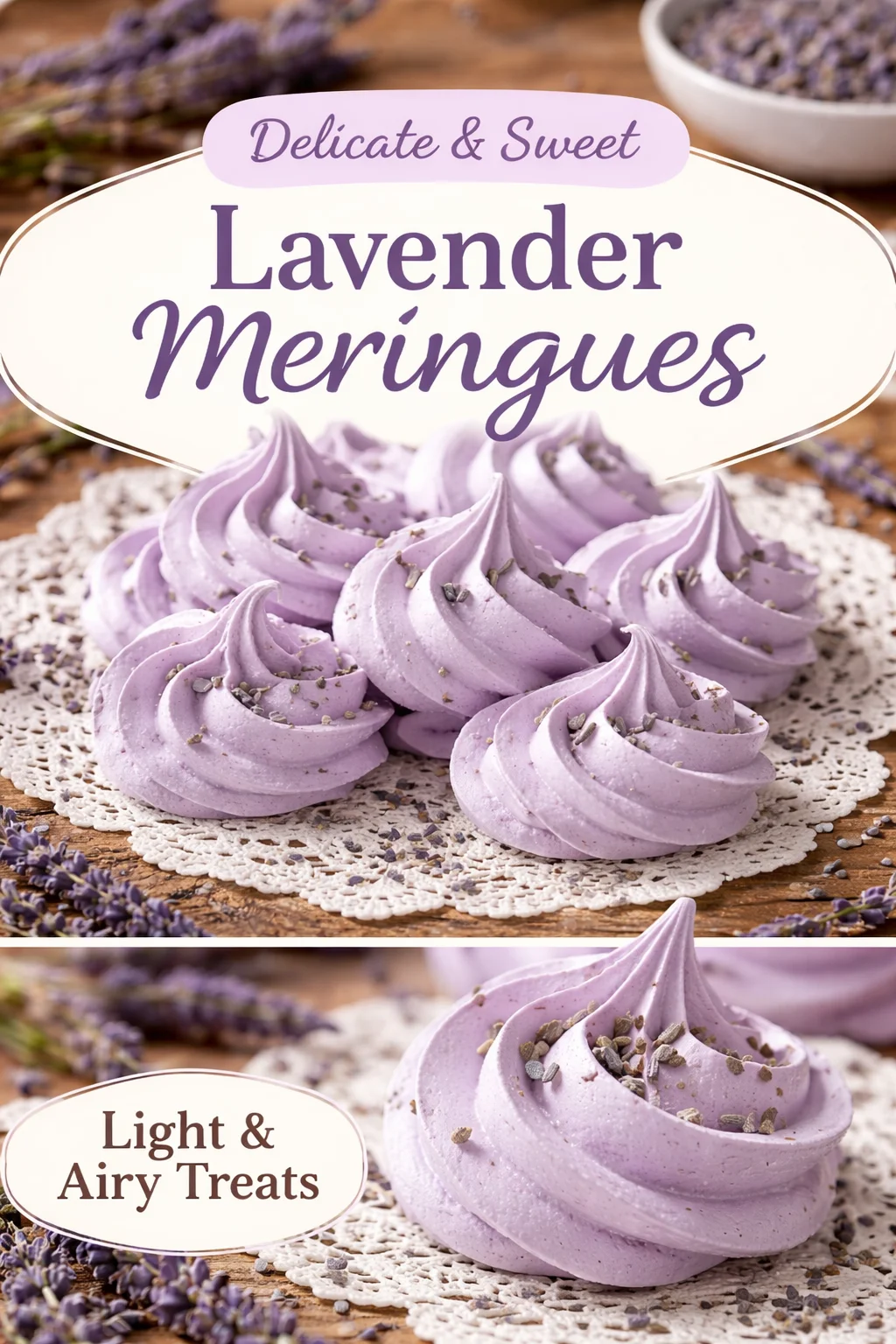
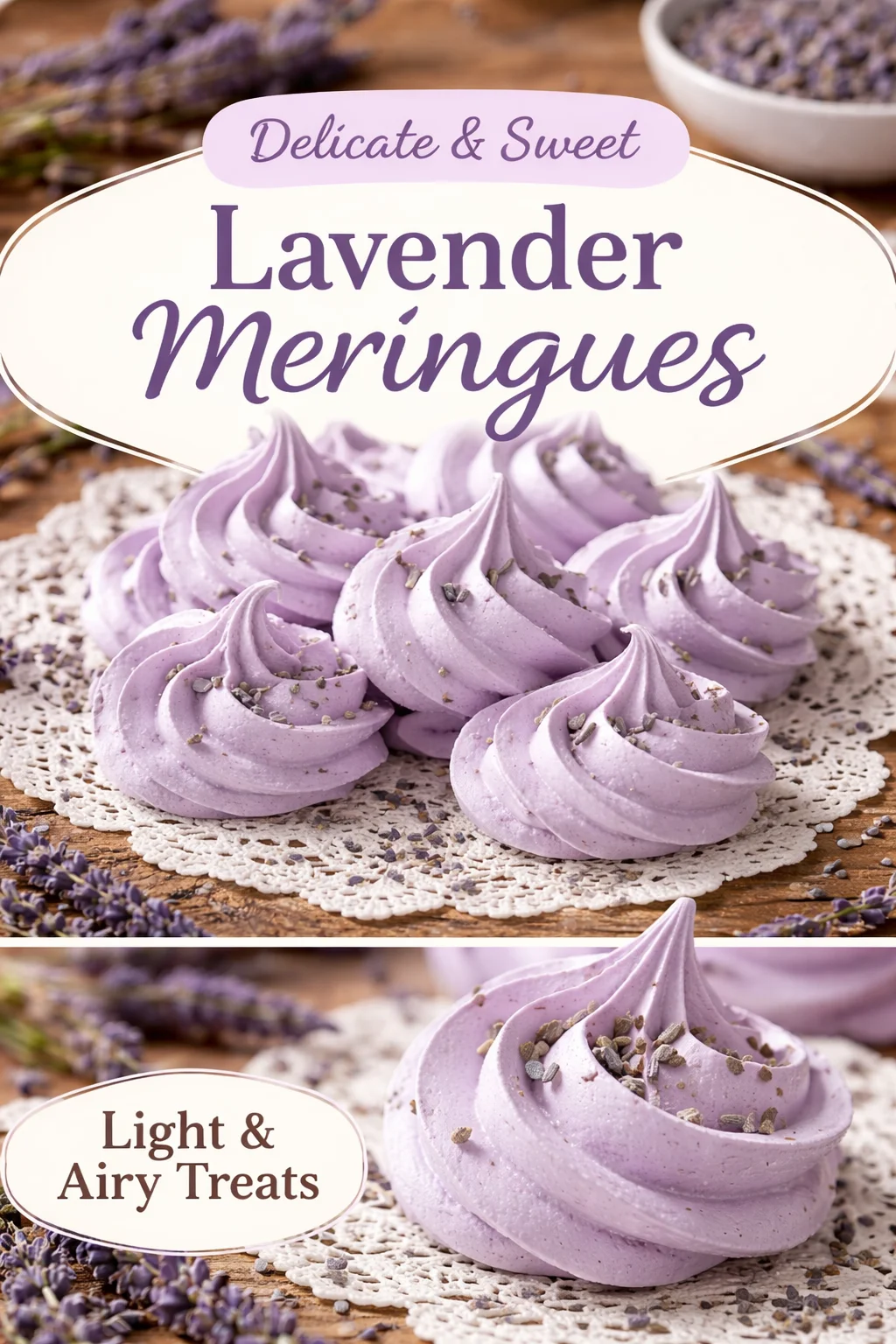
I first made these airy lavender meringues on a slow Sunday when I had extra egg whites and a jar of culinary lavender on the shelf. The result: crisp-on-the-outside, cloud-like centers with a delicate floral note — perfect for afternoon tea, gifting in a pretty box, or topping a lemon tart. They’re deceptively simple: few ingredients, low oven temp, and a bit of patience that rewards you with melt-in-your-mouth cookies.
Why you’ll love this recipe
Light, elegant, and surprisingly fuss-free, these lavender meringues are a small-batch treat that feels special without demanding a pastry degree. They’re ideal for:
- Tea parties, bridal showers, or pairing with coffee.
- Using up leftover egg whites after baking.
- Making ahead — they keep beautifully in an airtight container.
“Delicate, floral, and perfectly crisp — these meringues disappeared faster than I expected.” — a quick note from a friend who sampled them
If you like floral desserts, you might enjoy a lavender milkshake riff I tried that highlights the same flavor profile: Earl Grey lavender milkshake.
The cooking process explained
Before you start, know what to expect: you’ll whip room-temperature egg whites with a bit of cream of tartar to build volume, fold in sugar in two stages to stabilize the foam, then flavor with vanilla and culinary lavender. The low-and-slow oven dries the meringues rather than browning them, so don’t be tempted to open the door. Plan for active time of about 10–15 minutes and a long cooling period in the switched-off oven.
What you’ll need
- 2 large egg whites, at room temperature
- 1/8 teaspoon cream of tartar
- 1/2 cup sugar (granulated)
- 1/4 teaspoon vanilla extract
- 2–3 teaspoons culinary lavender (finely crushed)
- Purple food coloring, optional
Notes and substitutions:
- Room-temperature egg whites whip up faster and to greater volume. If your eggs were refrigerated, let them sit out 20–30 minutes.
- If you prefer a less floral cookie, use 2 teaspoons of lavender; use 3 teaspoons for a more pronounced note.
- For a different aroma, substitute lemon zest for lavender (about 1 teaspoon).
How to prepare it
- Preheat and position: Place an oven rack in the middle position and preheat the oven to 200°F (about 95°C). Line a baking sheet with parchment.
- Start the whites: In a clean mixing bowl, beat the egg whites on medium-low until slightly opaque and frothy (20–60 seconds).
- Stabilize: Add the cream of tartar and crank the speed to medium-high. Beat until the whites turn white and thick — like shaving cream — about 90–120 seconds.
- Add sugar in two stages: Slowly sprinkle in 1/4 cup of the sugar while mixing. Once that’s fully incorporated, reduce the speed to low.
- Final additions: Add the remaining sugar, vanilla extract, and crushed lavender. Beat on low until just combined. If using color, add a drop or two and swirl gently.
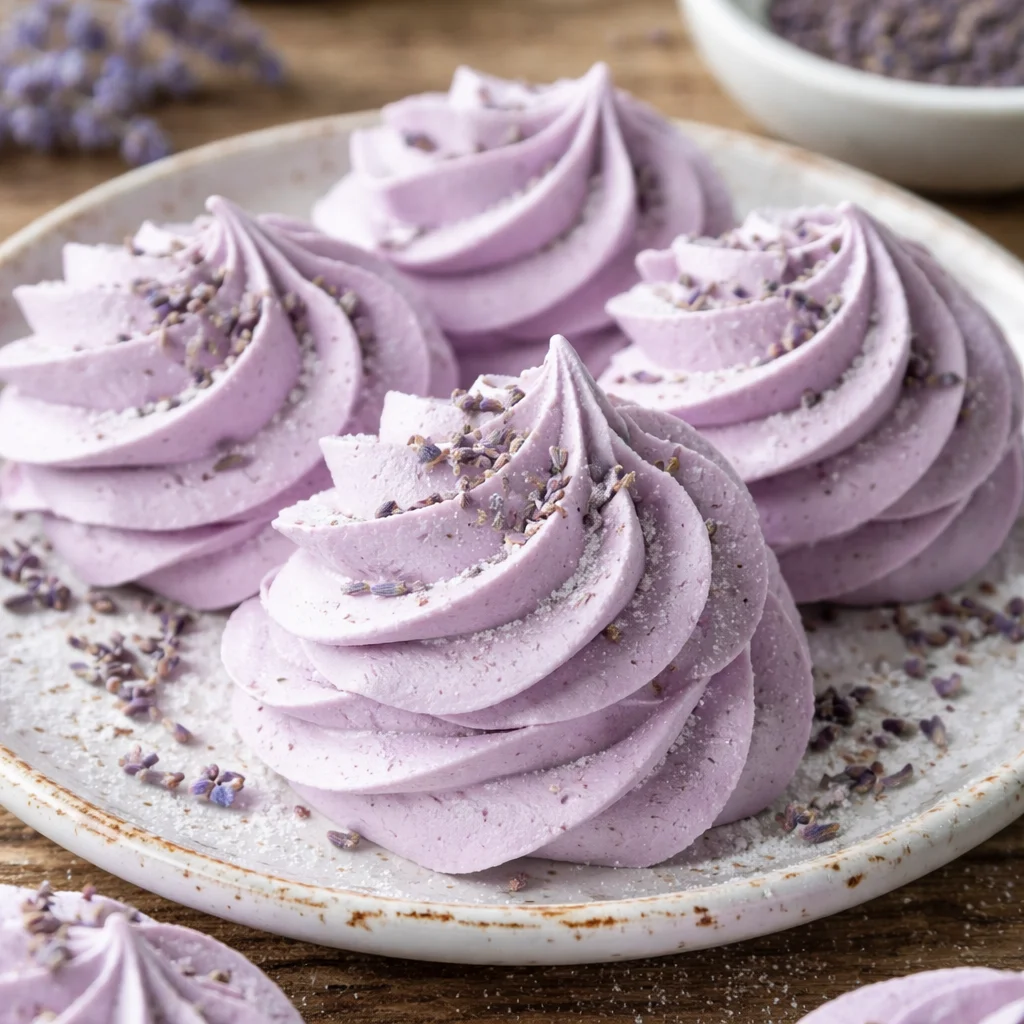
- Pipe: Transfer the meringue to a piping bag fitted with a 3/4"–1" tip (or use a zip-top bag with the corner snipped). Pipe walnut-sized mounds about 1" apart onto the lined sheet.
- Bake and cool: Bake at 200°F for 90 minutes without opening the oven. Turn off the oven and let the meringues cool inside for several hours or overnight; this finishes drying them out.
- Store: Once fully cooled, keep the cookies in an airtight container at room temperature.
Directions to follow
- Use a spotless, grease-free bowl and whisk; any fat prevents whites from whipping properly.
- Measure sugar precisely — too much or too little affects texture.
- Resist opening the oven during baking or cooling; the steady, low heat is what dries rather than browns the meringues.
- If you want very glossy peaks, finish the whisking at medium speed for a few seconds after all sugar is added, but stop as soon as the meringue holds stiff peaks.
Best ways to enjoy it
These meringues are tiny, elegant bites. Try:
- Serving with tea or an espresso for contrast.
- Crumbling over a bowl of lemon curd and whipped cream for a quick lemon-mousse parfait.
- Boxed up as homemade gifts tied with ribbon.
Pair them with a honey-lavender dessert for a coordinated platter; the flavor match is lovely with honey lavender cheesecake.
Storage and reheating tips
- Room temperature: Store in an airtight container for up to two weeks if they were fully dried in the oven. Include a piece of parchment between layers to prevent sticking.
- Freezing: Place cooled meringues in a single layer on a baking sheet to freeze solid, then transfer to an airtight container with parchment between layers; they’ll keep up to 2 months. Thaw at room temperature — do not microwave.
- Avoid humidity: Meringues absorb moisture and will soften on humid days; store with silica gel packets (food-safe) or inside the driest part of your pantry.
For a savory-sweet course idea that pairs well with small cookies, I sometimes make a simple gluten-free soup while my meringues dry: gluten-free lasagna soup.
Helpful cooking tips
- Use superfine (caster) sugar if you have it; it dissolves faster. If using granulated, pulse it briefly in a blender to make it finer.
- Crush the lavender between fingers or pulse in a spice grinder for even distribution — whole buds look pretty but can be tough to bite.
- If your meringue seems weepy or grainy, keep beating: sometimes the sugar hasn’t fully dissolved. Rub a little between your fingers — it should feel smooth, not gritty.
- For consistent sizing, pipe using a template under the parchment or use a small cookie scoop to portion before shaping.
I often display a few test meringues to check doneness and adjust baking/cooling times depending on humidity in my kitchen; that habit prevents batches from going soft.
Creative twists
- Chocolate-dipped: Dip the bottom of cooled meringues in melted dark chocolate and chill until set.
- Citrus lavender: Fold in 1 teaspoon lemon zest for a brighter profile.
- Almond-lavender: Add 1/4 teaspoon almond extract (in place of or with vanilla) for an Italian-style touch.
- Vegan option: Try aquafaba (chickpea brine) whipped with sugar and lavender — there’s a good vegan version online for guidance: Honey lavender cheesecake — while it’s a different dessert, it’s a helpful reference for floral pairings.
- Color play: A tiny drop of purple gel food coloring provides a subtle, elegant hue without altering texture.
Conclusion
These airy lavender meringues are a small-batch way to add a floral, elegant touch to gatherings or quiet afternoons. They reward a little patience with a texture that’s crisp outside and tender inside, and they pair beautifully with honey or lemon desserts. For a classic recipe source and another lavender-sweet meringue idea, see this detailed write-up on Airy Lavender Meringues – The Artisan Life and a vegan alternative at Vegan Lavender Aquafaba Meringues.
Helpful answers
Q: How long do these meringues take to make from start to finish?
A: Active prep is about 10–15 minutes. Bake 90 minutes, then cool in the oven for several hours or overnight. Plan for a full day if you’re including oven cooling.
Q: Can I use dried lavender from the spice aisle?
A: Use culinary lavender (Lavandula angustifolia) labeled for cooking. Avoid strongly scented ornamental varieties. Crush or grind the buds so they’re not chewy.
Q: What if my meringues crack or brown?
A: Browned tops mean the oven is too hot or too close to the heating element. Cracking can happen if the meringues cool too quickly; that’s why leaving them in the switched-off oven to cool slowly helps.
Q: Can I make them ahead for a party?
A: Yes — if fully dried and stored airtight, they keep up to two weeks. Make sure they’re completely cool and dry before sealing.
Q: Any tips for piping perfect rounds?
A: Hold the bag vertically about 1/2" above the parchment, pipe with steady pressure, and release in one quick upward flick to avoid peaks that brown.
Q: Are these safe to eat if made with raw egg whites?
A: Meringues involve raw egg whites but are baked/dried at low heat. If you’re concerned about salmonella, use pasteurized egg whites or egg-white products.
Lavender Meringues
Ingredients
Meringue Ingredients
- 2 large egg whites, at room temperature Room-temperature egg whites whip up faster.
- 1/8 teaspoon cream of tartar
- 1/2 cup sugar (granulated) Use superfine sugar for faster dissolution if possible.
- 1/4 teaspoon vanilla extract
- 2-3 teaspoons culinary lavender (finely crushed) Use 2 teaspoons for a subtle flavor; 3 for a stronger note.
- 1 drop purple food coloring (optional) Provides a subtle hue without changing the texture.
Instructions
Preparation
- Preheat the oven to 200°F (about 95°C) and position a rack in the middle. Line a baking sheet with parchment paper.
- In a clean mixing bowl, beat the egg whites on medium-low until slightly opaque and frothy (20–60 seconds).
- Add cream of tartar and increase the speed to medium-high, beating until the whites are thick and white, about 90–120 seconds.
- Slowly sprinkle in 1/4 cup of sugar while mixing. Once fully incorporated, reduce speed to low.
- Add the remaining sugar, vanilla extract, and crushed lavender. Beat on low until just combined. If using food coloring, add a drop or two and swirl gently.
- Transfer the meringue to a piping bag fitted with a 3/4"–1" tip (or a zip-top bag with the corner snipped). Pipe walnut-sized mounds about 1" apart onto the lined sheet.
Baking and Cooling
- Bake the meringues at 200°F for 90 minutes without opening the oven.
- After baking, turn off the oven and let meringues cool inside for several hours or overnight.
Storage
- Once fully cooled, store the meringues in an airtight container at room temperature for up to two weeks.