Coconut Flour Honey Cookies


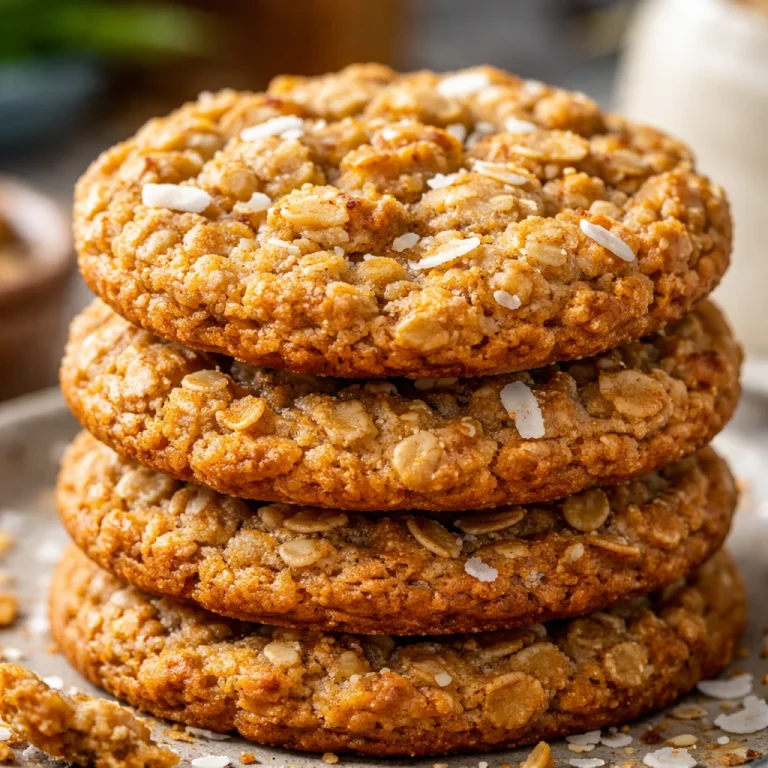
I remember the first time I baked these coconut flour honey cookies: the smell of honey and toasted coconut oil filled the kitchen, and the cookies came out tender with a lightly crisp edge. They’re a simple, naturally sweet cookie that’s great when you want something quick, grain-free, and a little bit wholesome. This recipe shines when you want an easy dessert for a weeknight treat, a lunchbox nibble, or a tea-time accompaniment that isn’t loaded with white sugar.
Why you’ll love this dish
Coconut flour honey cookies give you a great balance of sweet and soft without needing refined sugar or wheat flour. Coconut flour is highly absorbent, so you get a small-batch cookie that feels substantial even though it uses minimal ingredients. These cookies are perfect for busy bakers who want a quick, bakery-style bite with less fuss—and they’re naturally gluten-free for people avoiding wheat.
"Light, slightly chewy, and just sweet enough—these are my go-to when I want a healthier cookie that actually tastes like a treat."
These cookies pair well with other coconut-forward baking like this coconut oatmeal cookie recipe when you want a full spread of coconut treats at brunch.
Step-by-step overview
- Preheat the oven so it’s ready when the dough is mixed.
- Whisk the dry ingredients together to evenly distribute baking soda and salt.
- In a separate bowl, combine eggs with honey, melted coconut oil, and vanilla for a smooth wet mix.
- Fold the wet mix into the dry; coconut flour absorbs quickly and the dough will thicken fast.
- Scoop rounded tablespoon-sized mounds onto parchment and bake 10–12 minutes until edges are golden.
- Cool completely on a rack so they set (coconut flour cookies can be fragile warm).
If you like coconut-flavored cookies with nuttier notes, try these coconut-pecan cookies for a richer take: coconut pecan cookies.
What you’ll need
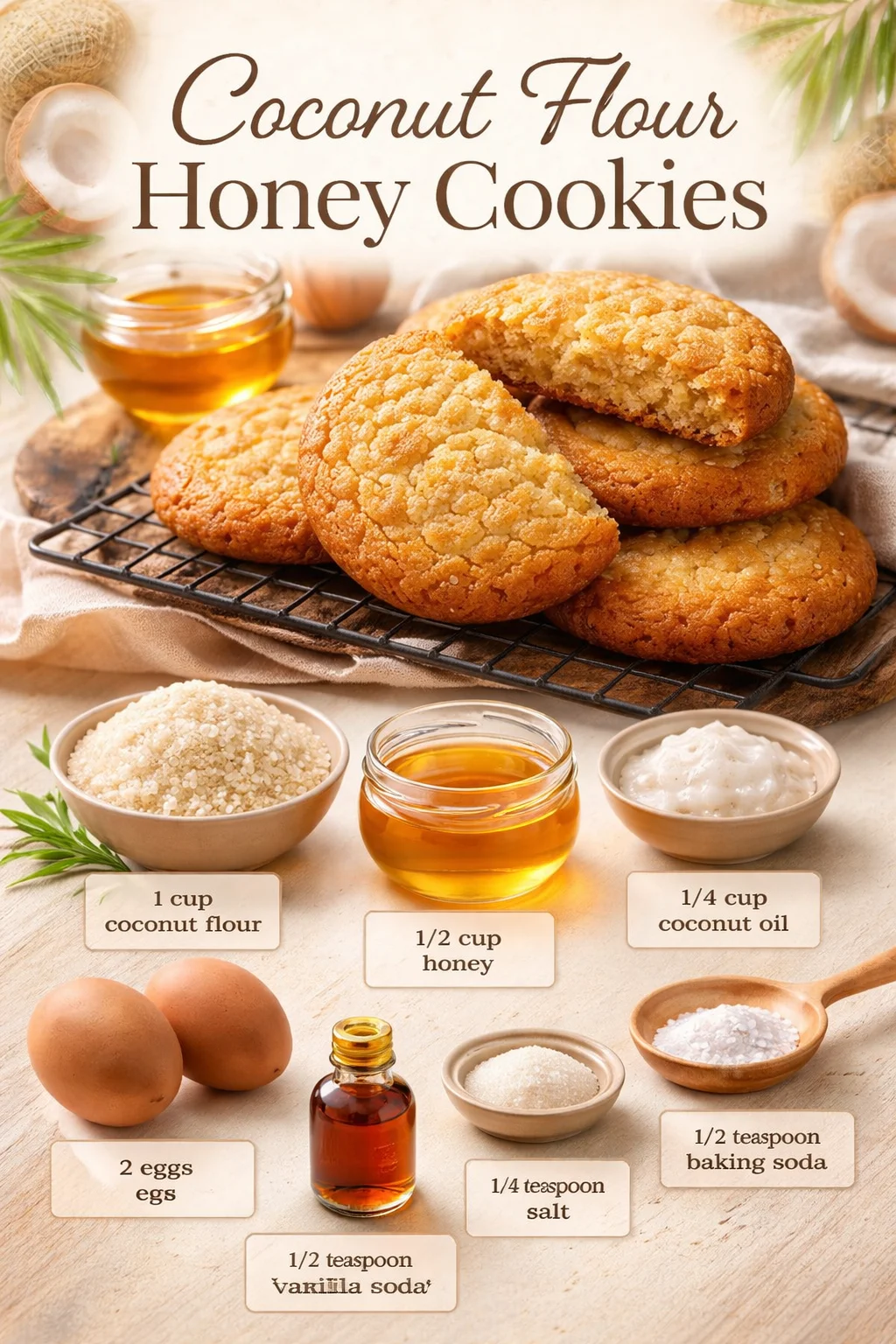
- 1 cup coconut flour
- 1/2 cup honey
- 1/4 cup coconut oil (melted)
- 1 teaspoon vanilla extract
- 1/4 teaspoon salt
- 2 large eggs
- 1/2 teaspoon baking soda
Notes and substitutions inline:
- Coconut oil: use neutral oil if you prefer less coconut flavor, but the texture will change slightly.
- Honey: maple syrup works in a pinch but will add a different flavor profile.
- To make these nut-free and still moist, stick with the oil and eggs; almond butter swaps aren’t necessary here.
Directions to follow
- Preheat your oven to 350°F (175°C) and line a baking sheet with parchment paper.
- In a medium bowl, whisk together the coconut flour, baking soda, and salt until well combined.
- In another bowl, whisk the eggs until slightly frothy. Add the honey, melted coconut oil, and vanilla; stir until smooth.
- Pour the wet ingredients into the dry and mix with a spatula. The batter will thicken quickly—scrape the sides to get everything incorporated. If it seems too dry, add 1 teaspoon of water or milk at a time until it holds together.
- Use a tablespoon or small cookie scoop to portion dough onto the prepared sheet. Space cookies about 1 1/2 inches apart. Gently flatten each mound with the back of a spoon—these don’t spread much.
- Bake for 10–12 minutes, rotating the sheet halfway through if your oven runs hot. Look for golden edges; bottoms should be lightly browned.
- Transfer cookies to a wire rack and cool completely before handling. They firm up as they cool and are easier to remove from the parchment.
If you enjoy crunchy-chewy textures, you might also like this crispy-chewy coconut recipe for inspiration: crispy chewy Carolina coconut cookies.
Best ways to enjoy it
These cookies are versatile:
- Serve warm with a cup of black tea or a latte for afternoon tea.
- Stack two together with a smear of nut butter or a thin layer of jam for a quick sandwich cookie.
- Crumble over Greek yogurt or vanilla ice cream for a coconut-honey crumble.
- Arrange on a dessert board with fresh fruit and dark chocolate for a simple get-together platter.
Pair them with something more oat-forward if you want textural contrast—try alongside a batch of coconut pecan toffee cookies for a party tray.
Storage and reheating tips
- Room temperature: Store in an airtight container for up to 3 days. Place a paper towel under the lid to absorb excess moisture if your kitchen is humid.
- Refrigerator: Keep in an airtight container for up to 7 days. Let cookies come to room temperature before serving for best texture.
- Freezer: Freeze baked cookies in a single layer on a sheet, then transfer to a freezer bag for up to 3 months. Thaw at room temperature.
- Reheating: Warm gently in a 300°F (150°C) oven for 4–6 minutes or microwave for 10–15 seconds to take the chill off.
Food safety note: Because these contain eggs, refrigerate any cookies left out for more than two hours in warm conditions.
Helpful cooking tips
- Measure coconut flour precisely—dip-and-sweep will compress it and you’ll end up with dry dough. Spoon into the cup and level with a knife.
- Expect a thick batter: coconut flour absorbs liquid quickly. If the dough seems crumbly, add one additional egg or a teaspoon of melted coconut oil.
- Don’t overbake: coconut flour cookies can dry out fast. Pull them when edges are golden and centers still look slightly soft.
- Let them cool on the baking sheet for 2–3 minutes before moving to a rack. They’ll be fragile hot.
- Use room-temperature eggs for better emulsification and a more even texture.
Creative twists
- Chocolate-dipped: melt dark chocolate and dip half the cooled cookie, then chill until set.
- Citrus-honey: add 1 teaspoon lemon or orange zest to brighten the flavor.
- Nutty crunch: fold in 1/4 cup chopped pecans or walnuts for texture.
- Vegan version: replace eggs with 2 flax eggs (2 tbsp ground flax + 6 tbsp water, chilled) and replace honey with maple syrup—note the texture will be softer and may need 1–2 minutes less baking.
- Spiced: add 1/2 teaspoon cinnamon and a pinch of nutmeg for a cozy fall cookie.

FAQ
Q: Are these cookies gluten-free?
A: Yes—this recipe uses coconut flour, which is naturally gluten-free. However, check labels on processed ingredients (like baking soda or coconut oil) if you need a certified gluten-free outcome.
Q: Can I substitute coconut flour with almond flour?
A: No—coconut flour is much more absorbent. If you want to use almond flour, use a recipe formulated for it (for example, an almond flour oatmeal cookie recipe) because the ratios and liquid requirements differ significantly.
Q: How long do these cookies stay fresh?
A: At room temperature in an airtight container, expect about 2–3 days for best texture; refrigerated they’ll last up to a week. Freezing extends life to about 3 months.
Q: Can I make the dough ahead of time?
A: You can refrigerate the dough in an airtight container for up to 24 hours; it may firm up, so let it sit at room temperature a few minutes before scooping.
Q: Is honey safe for babies in these cookies?
A: No—do not feed honey to children under 12 months because of the risk of botulism.
Conclusion
If you want more recipes using coconut flour or similar grain-free cookies, this well-tested coconut flour cookie recipe on Eating Bird Food is a helpful reference for technique and texture comparisons. For a chewy chocolate-chip variation using coconut flour, see this coconut flour chocolate chip cookies guide from Detoxinista for inspiration and ingredient swaps.
Coconut Flour Honey Cookies

Ingredients
Dry Ingredients
- 1 cup coconut flour Measure precisely to avoid dry dough.
- 1/2 cup honey Maple syrup can be used as a substitute.
- 1/4 cup coconut oil (melted) Can substitute with a neutral oil if preferred.
- 1 teaspoon vanilla extract
- 1/4 teaspoon salt
- 2 large eggs Use room temperature for best results.
- 1/2 teaspoon baking soda
Instructions
Preparation
- Preheat your oven to 350°F (175°C) and line a baking sheet with parchment paper.
- In a medium bowl, whisk together the coconut flour, baking soda, and salt until well combined.
- In another bowl, whisk the eggs until slightly frothy. Add the honey, melted coconut oil, and vanilla; stir until smooth.
- Pour the wet ingredients into the dry and mix with a spatula. The batter will thicken quickly—scrape the sides to get everything incorporated. If it seems too dry, add 1 teaspoon of water or milk at a time until it holds together.
Baking
- Use a tablespoon or small cookie scoop to portion dough onto the prepared sheet, spacing cookies about 1 1/2 inches apart.
- Gently flatten each mound with the back of a spoon—these don’t spread much.
- Bake for 10–12 minutes, rotating the sheet halfway through if your oven runs hot. Look for golden edges; bottoms should be lightly browned.
- Transfer cookies to a wire rack and cool completely before handling. They firm up as they cool.