Iced Oatmeal Cookies | Thin and Chewy


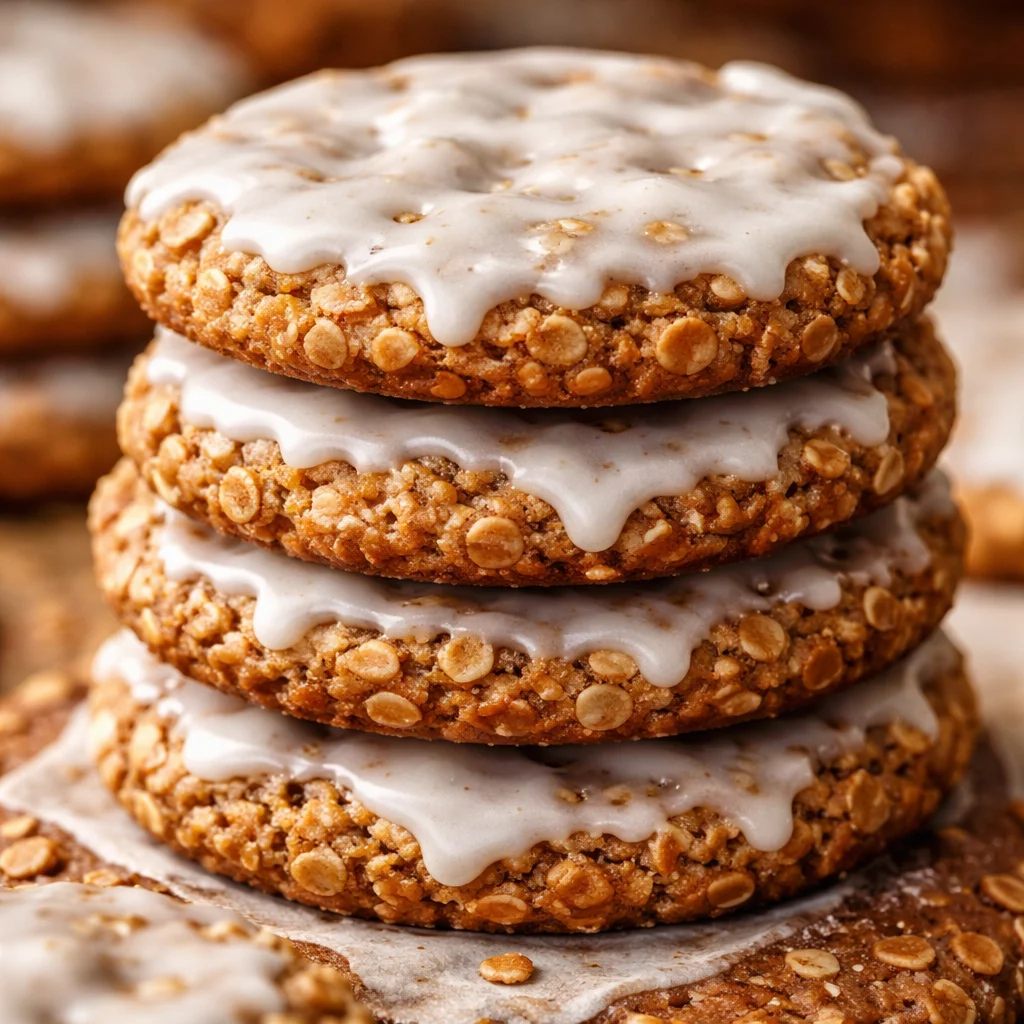
I’ve been making these iced oatmeal cookies for years when I want a thin, chewy cookie that still feels homey—soft center, crisped edges, and a bright lemon glaze to cut the richness. They’re an easy gluten-free swap (use a good all-purpose GF blend) and perfect for packing in lunchboxes, dunking into afternoon tea, or setting out at a bake sale.
Why you’ll love this dish
These cookies hit a sweet spot: quick to mix, made with pantry staples, and they keep a chewy middle while staying delightfully thin at the edge thanks to the combination of butter and vegetable shortening. They’re also forgiving—pulse old-fashioned oats to make quick oats, and the dough comes together fast. Make them for school snack days, a casual weekend bake, or anytime you want a cookie that feels nostalgic but travels well.
“A thin, chewy oatmeal cookie with a bright lemon glaze—comforting, not cloying. I always get asked for seconds.”
If you like a soft cookie that still gets a little crisp at the edge, you might also enjoy the texture on these unbelievably soft and chewy gingerbread man cookies—they follow a similar “soft-center, thin-edge” principle.
The cooking process explained
This is a quick three-part workflow so you know what to expect: (1) measure and mix the dry ingredients; (2) cream the fats, add egg and vanilla, then fold in sugars and oats to get the cookie dough; (3) portion and bake until edges are set but centers still soft, then finish with a simple lemon glaze. Overall active time is short—most of the effort is waiting for the cookies to cool enough for glazing.
What you’ll need
- 3/4 cup all purpose gluten free flour (choose an all-purpose blend that contains rice flour + binder or see notes below)
- 1/2 teaspoon xanthan gum (omit if your blend already contains it)
- 1/2 teaspoon baking soda
- 1/4 teaspoon kosher salt
- 1/4 teaspoon ground cinnamon
- 3 tablespoons granulated sugar
- 1/2 cup packed light brown sugar
- 1 cup gluten free quick oats (I pulse old-fashioned oats briefly in a food processor)
- 4 tablespoons unsalted butter, at room temperature
- 4 tablespoons non-hydrogenated vegetable shortening, at room temperature
- 1 egg, beaten and at room temperature
- 1 teaspoon pure vanilla extract
- For the glaze: 1 cup confectioners’ sugar, 1/2 teaspoon freshly squeezed lemon juice, 1–2 tablespoons tepid water (plus more by the teaspoon if needed)
Notes/substitutions:
- If you prefer dairy-free, use a vegan buttery spread that is similar in water content and a vegan shortening.
- For chewier cookies, don’t over-pulse the oats—aim for quick-oat texture, not powder.
Directions to follow
- Preheat and prep: Preheat oven to 350°F (175°C). Line a rimmed baking sheet with unbleached parchment paper and set it aside.
- Whisk dry ingredients: In a bowl, whisk together the gluten free flour, xanthan gum (if using), baking soda, salt, and cinnamon.
- Cream fats and sugars: In a separate bowl, cream the butter and vegetable shortening with the granulated and brown sugars until light and slightly fluffy (about 2–3 minutes with a hand mixer). This combination keeps edges thin and centers chewy.
- Add egg and vanilla: Beat in the beaten egg and vanilla until combined.
- Combine with dry mix: Fold the dry ingredients into the wet just until incorporated. Stir in the quick oats until evenly distributed. The dough should be soft and slightly sticky.
- Portion: Drop rounded tablespoons of dough onto the prepared sheet, spacing them about 2 inches apart (they will spread). For thinner cookies, flatten slightly with the back of a spoon.
- Bake: Bake for 9–12 minutes, or until edges are golden and centers look set but still soft. Times will vary by oven—remove when the center no longer looks wet.
- Cool: Let the cookies rest on the baking sheet for 3–4 minutes, then transfer to a wire rack to finish cooling.
- Make the glaze: Whisk the confectioners’ sugar with the lemon juice and 1 tablespoon tepid water. Add more water, a teaspoon at a time, until a pourable glaze forms.
- Ice the cookies: When cookies are completely cool, drizzle or brush the glaze over the tops. Let the glaze set for about 15–30 minutes before stacking.
Key ingredients
- Gluten free all-purpose flour: pick a blend made for cookies (one with a binder or add xanthan if needed).
- Oats: quick oats are used for texture; pulse old-fashioned oats lightly to create them.
- Butter + shortening: the classic ratio gives thin edges and chewiness.
- Lemon glaze: confectioners’ sugar + lemon juice thinned with water for a glossy finish.
How to serve Iced Oatmeal Cookies | Thin and Chewy
- Best with: a cold glass of milk, a steaming cup of tea, or coffee for dunking.
- Party idea: arrange cookies on a platter with small bowls of chopped nuts and dried fruit for guests to mix into their cookies (or offer plain and cinnamon-sugar variations).
- For a playful dessert: sandwich a scoop of vanilla ice cream between two cookies for a chewy, iced oatmeal ice cream sandwich—similar texture approaches can be found in small-batch cookie recipes like this chewy pumpkin snickerdoodle cookies which pair well with autumn beverages.
Storage and reheating tips
- Room temperature: Store cooled cookies in an airtight container at room temperature for up to 3–4 days. Place a sheet of parchment between layers to avoid sticking to the glaze.
- Refrigeration: If your kitchen is warm or your glaze is delicate, refrigerate in an airtight container for up to 7 days.
- Freezing: Freeze baked cookies (no glaze) in a single layer on a tray until firm, then stack with parchment between layers in a freezer-safe bag for up to 3 months. Thaw at room temperature and glaze after thawing.
- Reheating: Warm a cookie for 8–10 seconds in the microwave to revive chewiness, or 3–4 minutes at 275°F (135°C) in a single layer on a sheet to crisp the edge slightly.
Helpful cooking tips
- Measure flour correctly: Spoon and level your GF flour to avoid heavy, dry cookies.
- Room-temp ingredients: Let the butter and egg come to room temperature for even mixing.
- Don’t overmix: Overworking GF dough can lead to tough cookies; mix until just combined.
- Spread control: For thicker cookies, chill dough balls 15–30 minutes before baking; for thinner cookies, bake immediately.
- Oats texture: If you like a little chew, pulse old-fashioned oats briefly—don’t turn them into flour.
- Want inspiration? See more technique notes in this unbelievably soft and chewy gingerbread man cookies write-up that explores similar texture tips.
Recipe variations
- Raisin or cranberry oatmeal: Fold in 1/2 cup raisins or dried cranberries.
- Chocolate chip twist: Add 1/2 cup dark or semi-sweet chips for chunks of melty chocolate.
- Spiced maple glaze: Swap the lemon for 1/2 teaspoon maple extract and 1–2 teaspoons milk.
- Nutty oats: Stir in 1/3 cup chopped toasted pecans or walnuts for crunch.
- Vegan version: Use a flax egg (1 Tbsp ground flax + 3 Tbsp water), vegan butter, and a plant-based shortening; texture will be slightly different but still tasty—see how texture swaps are handled on similar recipes like unbelievably soft and chewy gingerbread man cookies.

FAQ
Q: Can I use old-fashioned oats instead of quick oats?
A: Yes—pulse old-fashioned oats for a few seconds in a food processor to make quick oats. If you leave them whole, the cookies will be chewier and thicker.
Q: Do I have to use vegetable shortening?
A: Shortening helps the cookies spread and stay thin. You can use all butter, but expect slightly less spread and a chewier center. For a fully vegan version, use a vegan shortening plus vegan butter substitute.
Q: Why do my cookies come out cakey instead of thin and chewy?
A: Common causes: too much flour, overmixing, cold butter, or thick dough balls. Measure flour accurately, mix just until combined, use room-temperature fats, and flatten dough slightly before baking.
Q: Can I make the dough ahead of time?
A: Yes—refrigerate dough balls up to 48 hours (they’ll spread less when baked). Freeze dough balls individually for up to 3 months; bake from frozen, adding a minute or two to bake time.
Q: How long does the glaze take to set?
A: At room temperature, the glaze should be set within 15–30 minutes. If your kitchen is humid, allow a bit longer or chill briefly to speed setting.
Conclusion
Thin, chewy iced oatmeal cookies are an easy, crowd-pleasing bake—great for everyday snacks and small gatherings. For a classic take and technique comparison, I recommend checking the chewy version at Chewy Homemade Iced Oatmeal Cookies – Tutti Dolci Baking Recipes. If you want a more step-by-step tutorial with photos, Sally’s detailed guide is also helpful: Iced Oatmeal Cookies – Sally’s Baking Addiction.
Iced Oatmeal Cookies

Ingredients
Cookie Ingredients
- 3/4 cup all-purpose gluten free flour Choose an all-purpose blend that contains rice flour + binder.
- 1/2 teaspoon xanthan gum Omit if your blend already contains it.
- 1/2 teaspoon baking soda
- 1/4 teaspoon kosher salt
- 1/4 teaspoon ground cinnamon
- 3 tablespoons granulated sugar
- 1/2 cup packed light brown sugar
- 1 cup gluten free quick oats Pulse old-fashioned oats briefly in a food processor.
- 4 tablespoons unsalted butter At room temperature.
- 4 tablespoons non-hydrogenated vegetable shortening At room temperature.
- 1 each egg Beaten and at room temperature.
- 1 teaspoon pure vanilla extract
Lemon Glaze
- 1 cup confectioners’ sugar
- 1/2 teaspoon freshly squeezed lemon juice
- 1–2 tablespoons tepid water Add more by the teaspoon if needed.
Instructions
Preparation
- Preheat oven to 350°F (175°C). Line a rimmed baking sheet with unbleached parchment paper.
Mix Dry Ingredients
- In a bowl, whisk together gluten free flour, xanthan gum (if using), baking soda, salt, and cinnamon.
Cream Fats and Sugars
- In a separate bowl, cream butter and vegetable shortening with granulated and brown sugars until light and fluffy, about 2–3 minutes with a hand mixer.
Add Egg and Vanilla
- Beat in the beaten egg and vanilla until combined.
Combine Mixtures
- Fold dry ingredients into the wet mixture just until incorporated. Stir in quick oats until evenly distributed.
Portion and Bake
- Drop rounded tablespoons of dough onto prepared sheet, spacing them about 2 inches apart. For thinner cookies, flatten slightly with the back of a spoon.
- Bake for 9–12 minutes, or until edges are golden and centers look set but still soft.
- Let cookies rest for 3–4 minutes, then transfer to a wire rack to finish cooling.
Make the Glaze
- Whisk the confectioners’ sugar with lemon juice and 1 tablespoon tepid water. Add more water, a teaspoon at a time, until a pourable glaze forms.
Ice the Cookies
- When cookies are completely cool, drizzle or brush the glaze over the tops. Let the glaze set for about 15–30 minutes before stacking.