Spaghetti with Garlic and Oil

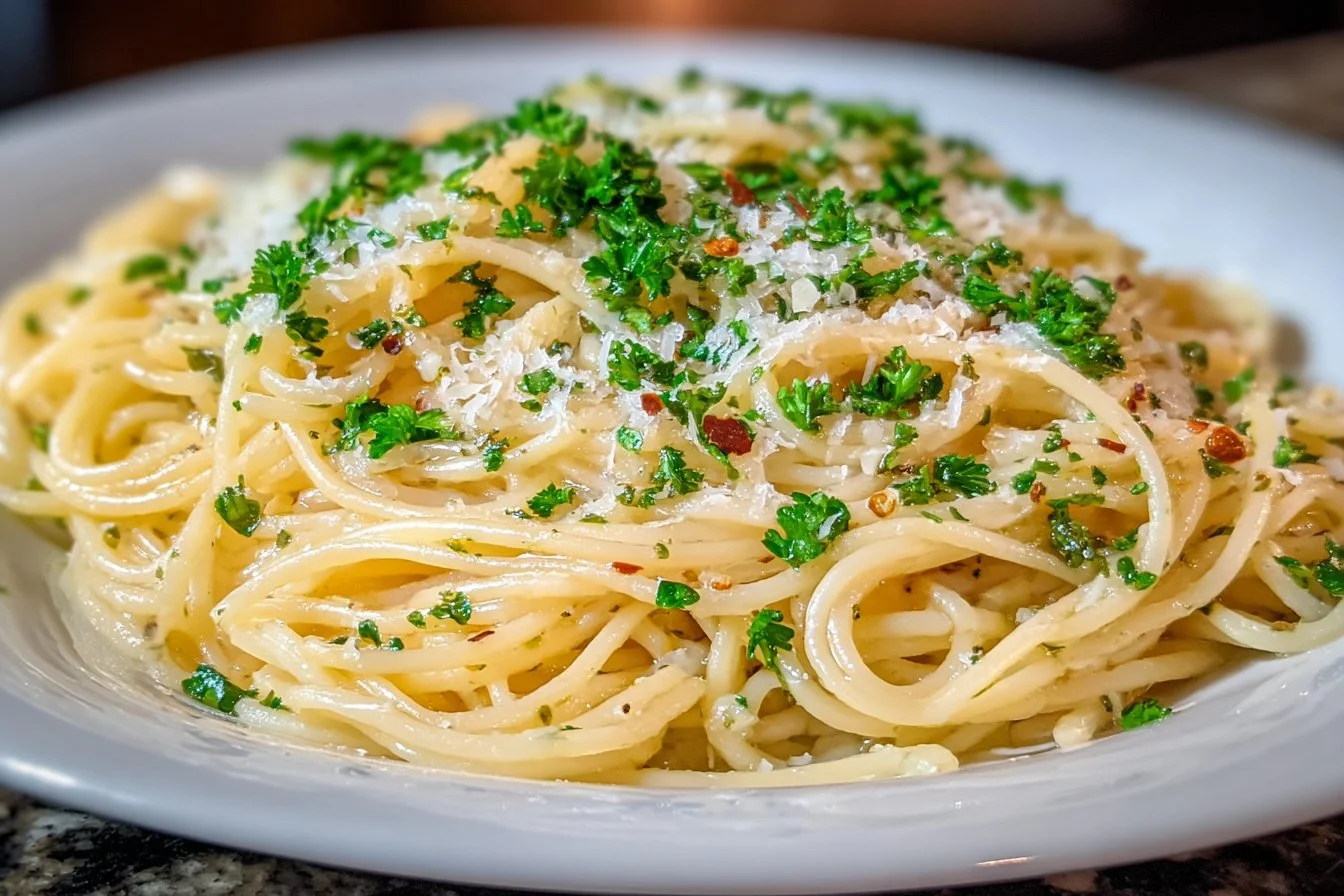
I make Spaghetti with Garlic and Oil most weeks when I want something fast, comforting, and unapologetically garlicky. This is the classic Italian aglio e olio: long strands of spaghetti tossed in warm, fragrant olive oil, paper-thin slices of garlic that turn tender with a kiss of red pepper, and a scattering of fresh parsley. It’s the kind of recipe that tastes like effort but comes together in the time it takes the pasta to cook. If you enjoy bold garlic flavors, you might also like this garlic cream shrimp and salmon recipe I tested last month.
Why you’ll love this dish
Aglio e olio is simplicity at its best. There’s no heavy sauce, no long simmering—just high-quality olive oil, fresh garlic, and hot pasta water coming together to coat every strand. It’s:
- Extremely quick: ready in about 15–20 minutes.
- Budget-friendly: pantry staples deliver big flavor.
- Customizable: add protein, vegetables, or more heat if you like.
- Kid-adaptable: omit the red pepper flakes for a milder dish.
“So simple, yet so satisfying — a weeknight comfort food that never fails.” — a dinner guest after my third time making this
The cooking process explained
Before you start, here’s the short roadmap so you know what to expect:
- Bring a large pot of well-salted water to a rapid boil and cook the spaghetti until al dente.
- While the pasta cooks, gently sauté thinly sliced garlic in extra virgin olive oil until golden and aromatic; add red pepper flakes.
- Reserve some pasta cooking water, drain the spaghetti, then toss the pasta with the garlic oil and a splash of the reserved water to emulsify a silky sauce.
- Finish with chopped parsley and optional Parmesan, then serve immediately.
This overview helps you multitask: garlic on the stove, pasta in the pot, and everything combined in under 20 minutes.
What you’ll need
- 400 g (14 oz) spaghetti
- 4 tablespoons extra virgin olive oil (use good quality for flavor)
- 6 cloves garlic, thinly sliced (peeled and sliced paper-thin)
- ½ teaspoon red pepper flakes, or to taste (optional)
- ¼ cup fresh parsley, finely chopped
- Salt, generously for the pasta water
- Optional: Grated Parmesan cheese for garnish
Notes and swaps:
- Use spaghetti or any long pasta like linguine or bucatini. Bucatini gives a fun hollow texture that holds the sauce.
- Olive oil quality matters — use a fruity extra virgin for best aroma.
- For garlic-allergy or milder flavor, roast the garlic instead of slicing.
- Vegetarian and vegan-friendly: skip the Parmesan or use a plant-based alternative.
How to prepare it
- Cook the pasta: Fill a large pot with water, generously salt it (it should taste like the sea), and bring to a boil. Add the spaghetti and cook until al dente according to package directions, usually 8–10 minutes. Reserve about 1 cup of the pasta water before draining.
- Sauté the garlic and pepper flakes: While pasta cooks, heat the olive oil in a large skillet over medium-low heat. Add the thinly sliced garlic and keep the heat low — you want golden, not brown, garlic. Stir often. When the garlic is fragrant and just turning light golden (about 2–3 minutes), add the red pepper flakes and remove from heat briefly to avoid burning.
- Toss pasta in the sauce: Add a ladle of reserved pasta water to the skillet to loosen the oil and create an emulsion. Add the drained spaghetti directly into the skillet (or return pasta to the pot and pour the garlic oil over it). Toss vigorously for 30–60 seconds so each strand is coated and the sauce clings. Add more pasta water a tablespoon at a time if it seems dry.
- Finish and garnish: Stir in the chopped parsley, season with a pinch of salt to taste, and sprinkle with grated Parmesan if using. Serve immediately on warm plates.
Pro tip: If your skillet is small, combine everything in the pasta pot to toss cleanly. For a protein boost or contrast, serve alongside the chicken and mushroom stir-fry with garlic soy glaze from my pantry-tested recipes.
Best ways to enjoy it
- Plate simply: twirl a nest of pasta onto the center of warm plates, spoon extra oil and garlic over the top, and finish with parsley and cheese.
- Pairings: crisp green salad with lemon vinaigrette, roasted cherry tomatoes, or sautéed spinach cut through the richness. For wine, a zesty white like Vermentino or Pinot Grigio works nicely.
- Make it a main or a side: serve as the star with a simple protein (grilled shrimp, roasted chicken) or as a pasta course before a multi-course Italian dinner.
Storage and reheating tips
- Refrigerating: Store leftovers in an airtight container in the refrigerator for up to 3 days. Put a drop of olive oil on top to help prevent the pasta from drying out.
- Reheating: Reheat gently in a skillet over low heat with a splash of water or a little olive oil to loosen the sauce. Microwave on medium heat in short intervals, stirring and adding a bit of water if needed.
- Freezing: Not ideal. Pasta with olive oil can become grainy after freezing and thawing. If you must, freeze for up to 1 month and thaw overnight in the fridge before reheating.
- Food safety: Do not leave cooked pasta at room temperature for more than two hours. Cool quickly and refrigerate.
Pro chef tips
- Thinly slice garlic with a sharp knife or mandoline for even cooking. Thicker slices take longer to soften; minced garlic will brown faster.
- Keep the oil temperature low. Garlic goes from golden to burnt very quickly — burnt garlic tastes bitter.
- Reserve at least ¾ cup of pasta water. The starch in the water is what binds oil and water into a silky sauce.
- Toss off the heat. Finish tossing off direct heat so the garlic doesn’t continue to darken.
- Salt early. Salting the pasta water seasons the pasta internally, improving overall balance.
- Use a warm pan and warm plates — cold surfaces cool the sauce and make it cling less.
Creative twists
- Protein additions: toss in sautéed shrimp, thinly sliced chicken breast, or crispy pancetta.
- Veg-forward: add blanched broccolini, sautéed mushrooms, or roasted cherry tomatoes.
- Citrus lift: finish with a squeeze of lemon and a little lemon zest for brightness.
- Nutty finish: sprinkle toasted breadcrumbs or crushed toasted almonds for texture.
- Vegan/low-fat: use less oil and finish with lemon and herbs, or add sautéed white beans for body.
- Want a richer version? Stir in a knob of butter at the end for a silkier mouthfeel.
If you like bold flavor pairings, try a spicier seafood twist inspired by my Cajun shrimp and salmon with garlic cream sauce for an adventurous dinner.
Your questions answered
Q: How long does this take from start to finish?
A: Plan on 15–20 minutes total: about 8–10 minutes for pasta and 5 minutes to prepare the sauce and toss.
Q: Can I use minced garlic instead of sliced?
A: Yes, but watch the heat closely. Minced garlic browns faster and can become bitter if it heats too long. Add it a bit later and keep the pan at medium-low.
Q: Should I salt the pasta water? How much?
A: Yes. Use a large pot and add roughly 1–1.5 tablespoons of kosher salt per 4–5 quarts of water — it should taste pleasantly salty. This seasons the pasta itself.
Q: Is this dish vegan?
A: The core recipe is vegan if you omit Parmesan. Use a plant-based cheese if you want the cheesy finish.
Q: My garlic burned — can I save the dish?
A: If the garlic has gone dark brown or black it will taste bitter. Start over with fresh oil and garlic; scrape the pasta into the new garlic oil and toss with reserved pasta water. Don’t try to mask burnt garlic with cheese.
Conclusion
Spaghetti with Garlic and Oil is a timeless, speedy meal that proves simplicity can be sublime. For a trusted, classic take on this dish, see this detailed Spaghetti Aglio e Olio Recipe that walks through technique and variations. If you’re after another home-tested version with extra serving ideas and photos, I recommend this thorough guide at Pasta Aglio e Olio {Pasta with Garlic and Oil} – Pinch and Swirl.
Spaghetti Aglio e Olio
Ingredients
Pasta Ingredients
- 400 g spaghetti
- Salt to taste Salt, generously for the pasta water Make the water taste like the sea.
Sauce Ingredients
- 4 tablespoons extra virgin olive oil Use good quality for flavor.
- 6 cloves garlic, thinly sliced Peeled and sliced paper-thin.
- ½ teaspoon red pepper flakes Or to taste (optional).
- ¼ cup fresh parsley, finely chopped
- Optional: Grated Parmesan cheese for garnish
Instructions
Cooking the Pasta
- Fill a large pot with water, generously salt it, and bring to a boil. Add the spaghetti and cook until al dente according to package directions, usually 8–10 minutes. Reserve about 1 cup of the pasta water before draining.
Preparing the Sauce
- While pasta cooks, heat the olive oil in a large skillet over medium-low heat. Add the thinly sliced garlic and keep the heat low to prevent burning. Stir often.
- When the garlic is fragrant and just turning light golden (about 2–3 minutes), add the red pepper flakes and remove from heat briefly.
Tossing the Pasta
- Add a ladle of reserved pasta water to the skillet to loosen the oil and create an emulsion.
- Add the drained spaghetti directly into the skillet or return pasta to the pot and pour the garlic oil over it. Toss vigorously for 30–60 seconds then add more pasta water a tablespoon at a time if it seems dry.
Finishing Touches
- Stir in the chopped parsley, season with a pinch of salt to taste, and sprinkle with grated Parmesan if using. Serve immediately on warm plates.