Tabbouleh (Lebanese Tabbouleh Salad)

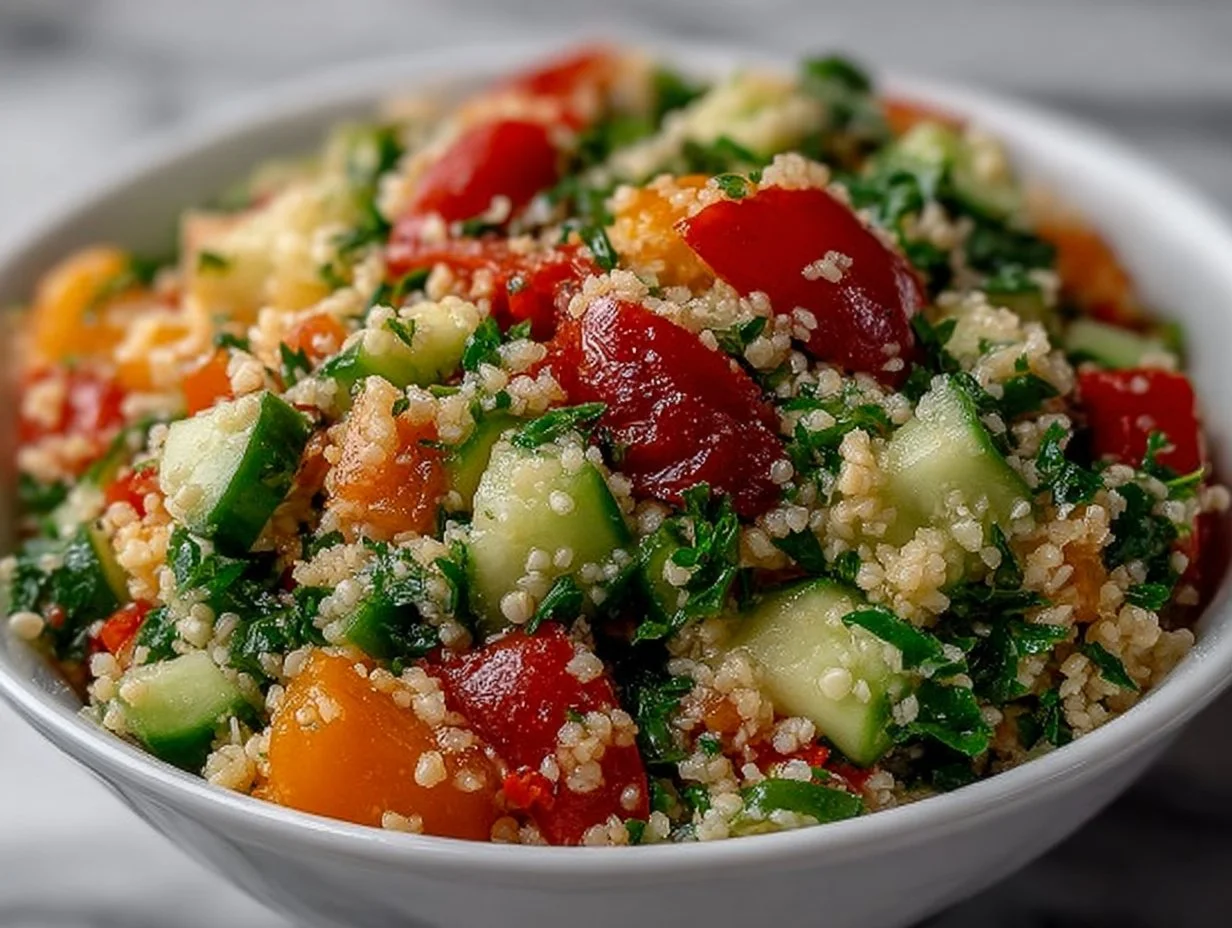
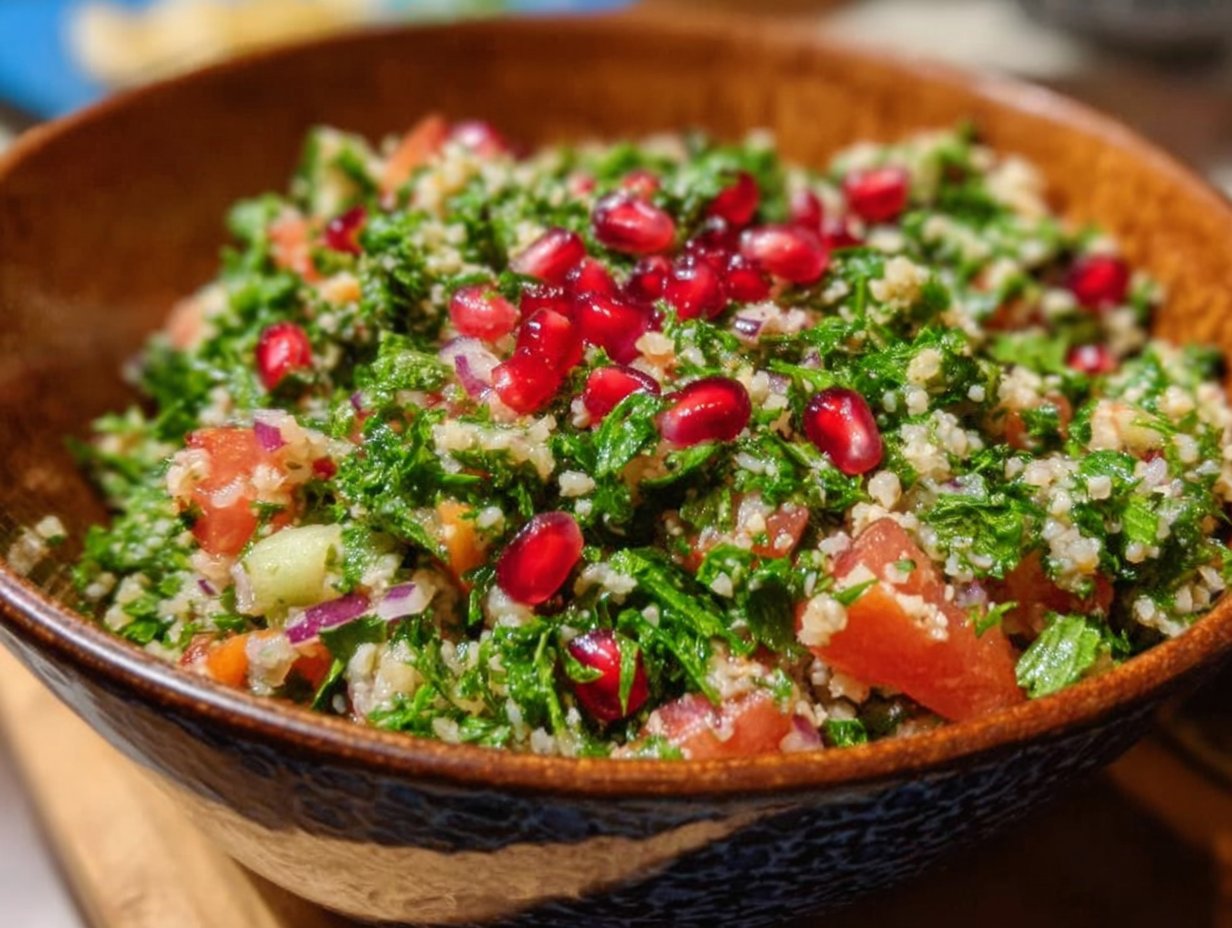
I still make this bright, herb-packed tabbouleh whenever I want something fresh, quick, and un-fussy that feels like a little celebration on the plate. This Lebanese salad is built on parsley and fine bulgur, brightened with lemon and pomegranate molasses, and finished with mint and jewel-like pomegranate seeds. It’s a perfect summer side, picnic star, or a light main when paired with grilled chicken or yogurt.
Why you’ll love this dish
Tabbouleh is a tiny miracle: inexpensive ingredients, minimal cooking, and a result that tastes far more complex than the effort suggests. It’s herb-forward (parsley is the star), naturally vegetarian and vegan, and scales easily for a family meal or a potluck. Make it when you want something light that still feels substantial — weeks of hot weather, a Mediterranean-themed dinner, or as a fresh counterpoint to rich foods.
“Crisp parsley, tangy pomegranate, and grainy bulgur — simple ingredients, unforgettable flavor.”
This salad is also forgiving. Use perfectly ripe tomatoes, don’t overcook the bulgur, and taste as you go. The balance of acid (lemon), sweetness/tang (pomegranate molasses), and salt is what makes it sing.
How this recipe comes together
A quick roadmap so you know what to expect:
- Cook the fine bulgur just until al dente, drain, and cool.
- Finely chop the parsley and mint (keep them dry and use a sharp knife).
- Dice tomato and onion, add pomegranate seeds.
- Toss bulgur and herbs with lemon, pomegranate molasses, olive oil, and salt.
- Taste, adjust, and serve chilled or at room temperature.
This is a no-fuss assembly: a few minutes at the stove for the bulgur, then mostly chopping and mixing.
What you’ll need
- 50 g fine bulgur (½ cup) — fine bulgur is traditional; it hydrates quickly.
- 2 medium tomatoes, finely diced (seed and drain if very juicy)
- 1 small red onion, finely diced (soak briefly in cold water if you want milder flavor)
- 3 cups flat-leaf parsley, finely chopped (packed; stems removed)
- 2 tbsp fresh mint leaves, finely chopped (optional: more to taste)
- ½ pomegranate, seeds (arils)
- 1½ tbsp lemon juice (freshly squeezed)
- 1 tbsp pomegranate molasses (substitute: 1 tbsp balsamic + 1 tsp honey if needed)
- 2 tbsp extra virgin olive oil
- 1 tsp salt (adjust to taste)
Notes: For gluten-free options, substitute cooked quinoa (see Variations). If you can’t find pomegranate molasses, increase lemon and add a touch of honey for depth.
How to prepare it
- Place the bulgur in a pan and cover with cold water. Bring to a boil over medium heat.
- Reduce heat and simmer gently for about 5 minutes, until the grains are al dente. Drain and spread the bulgur on a tray to cool. Fluff with a fork once cool.
- While the bulgur cools, wash tomatoes and dice finely. Place in a large mixing bowl.
- Peel and finely dice the red onion and add to the tomatoes. If you prefer less bite, soak diced onion in cold water for 5 minutes, then drain.
- Rinse parsley well and dry completely (use a salad spinner). Chop finely with a sharp knife to avoid bruising. Add to the bowl.
- Chop mint, then add mint and pomegranate seeds to the bowl with the tomatoes, onions, and parsley.
- Add the cooled, fluffed bulgur to the bowl. Drizzle in lemon juice, pomegranate molasses, olive oil, and sprinkle the salt.
- Toss everything together gently until combined. Taste and adjust: more lemon for brightness, more molasses or a pinch of sugar for sweetness, or more salt if needed.
Serve immediately or chill 30–60 minutes so flavors meld.
Best ways to enjoy it
- Serve tabbouleh alongside grilled lamb, chicken, or fish for a bright contrast.
- Spoon onto toasted pita or use as a filling for wraps with hummus.
- Offer as part of a mezze with olives, baba ganoush, and labneh.
- For a light main, top with pan-seared halloumi or a poached egg.
- Plate in a shallow bowl and sprinkle extra pomegranate seeds and a drizzle of olive oil for a pretty finish.
Keeping leftovers fresh
Store tabbouleh in an airtight container in the refrigerator. Because the bulgur continues to absorb dressing and moisture, it’s best eaten within 24–48 hours for texture and color. Do not freeze — the herbs and tomatoes wilt and separate when thawed. Chill within two hours of serving to stay within safe food-handling guidelines.
Pro chef tips
- Use a very sharp knife and a gentle rocking motion to finely chop parsley without bruising it; a dull blade makes bruised, dark leaves.
- Dry herbs thoroughly—excess water dilutes the dressing and makes the salad soggy. A salad spinner is worth it.
- Fine bulgur is traditional because it hydrates quickly and keeps the salad light. If using coarse bulgur, cook longer and increase water.
- If tomatoes are watery, core and gently squeeze out seeds before dicing, or use firmer, salad-ready varieties.
- Let the salad rest at least 30 minutes before serving for flavors to meld, but don’t wait too long or the parsley will brown and the texture will suffer.
Flavor swaps
- Gluten-free: Replace bulgur with cooked and cooled quinoa (use same volume once cooked).
- Heartier grain: Use farro or freekeh (cook fully and cool).
- Add protein: Stir in cooked chickpeas, grilled chicken, or flaked salmon.
- Cheese: Crumbled feta or labneh dollops make it richer.
- Extra crunch: Add diced cucumber or toasted pine nuts.
- Less acid: If you dislike pomegranate molasses, use extra lemon and a touch of honey or maple syrup.
Helpful answers
Q: How long does tabbouleh keep in the fridge?
A: Up to 48 hours is ideal. After that parsley softens and tomatoes make the salad watery. Store in an airtight container and chill within two hours of making.
Q: Can I use couscous instead of bulgur?
A: Small Israeli (pearl) couscous or fine couscous can work — cook and cool first. For the closest texture and flavor, use fine bulgur or cooked quinoa for a gluten-free swap.
Q: Is tabbouleh supposed to be mostly parsley?
A: Yes — authentic Lebanese tabbouleh emphasizes parsley over the grain. The bulgur adds body, but the salad should feel herb-forward.
Q: Can I make this ahead for a party?
A: Prepare the components (cook and cool bulgur, chop herbs, dice tomatoes) a few hours ahead and toss them together 30–60 minutes before guests arrive. This keeps the herbs bright.
Q: What’s a good substitute for pomegranate molasses?
A: Use 1 tbsp balsamic vinegar + 1 tsp honey or maple syrup, or increase lemon and add a little sugar to balance acidity.
Conclusion
If you want more twists and deeper background on traditional preparations, see this detailed version of a classic Lebanese approach at Lebanese Tabbouleh Salad. For a family recipe perspective with slightly different proportions and tips, read My Mother’s Lebanese Tabbouleh.
Enjoy this bright salad as a regular weeknight side or the star of your next Mediterranean spread — its freshness makes simple food feel special.
Lebanese Tabbouleh Salad
Ingredients
Main Ingredients
- 50 g fine bulgur Fine bulgur is traditional; it hydrates quickly.
- 2 medium tomatoes Finely diced (seed and drain if very juicy).
- 1 small red onion Finely diced (soak briefly in cold water if you want milder flavor).
- 3 cups flat-leaf parsley Finely chopped; packed; stems removed.
- 2 tbsp fresh mint leaves Finely chopped (optional: more to taste).
- ½ pomegranate seeds (arils)
- 1½ tbsp lemon juice Freshly squeezed.
- 1 tbsp pomegranate molasses Substitute: 1 tbsp balsamic + 1 tsp honey if needed.
- 2 tbsp extra virgin olive oil
- 1 tsp salt Adjust to taste.
Instructions
Preparation
- Place the bulgur in a pan and cover with cold water. Bring to a boil over medium heat.
- Reduce heat and simmer gently for about 5 minutes, until the grains are al dente. Drain and spread the bulgur on a tray to cool. Fluff with a fork once cool.
- While the bulgur cools, wash tomatoes and dice finely. Place in a large mixing bowl.
- Peel and finely dice the red onion and add to the tomatoes. If you prefer less bite, soak diced onion in cold water for 5 minutes, then drain.
- Rinse parsley well and dry completely. Chop finely with a sharp knife to avoid bruising. Add to the bowl.
- Chop mint, then add mint and pomegranate seeds to the bowl with the tomatoes, onions, and parsley.
- Add the cooled, fluffed bulgur to the bowl. Drizzle in lemon juice, pomegranate molasses, olive oil, and sprinkle the salt.
- Toss everything together gently until combined. Taste and adjust: more lemon for brightness, more molasses or a pinch of sugar for sweetness, or more salt if needed.
- Serve immediately or chill 30–60 minutes so flavors meld.