Easy Szechuan Noodles (Dan Dan Noodles)

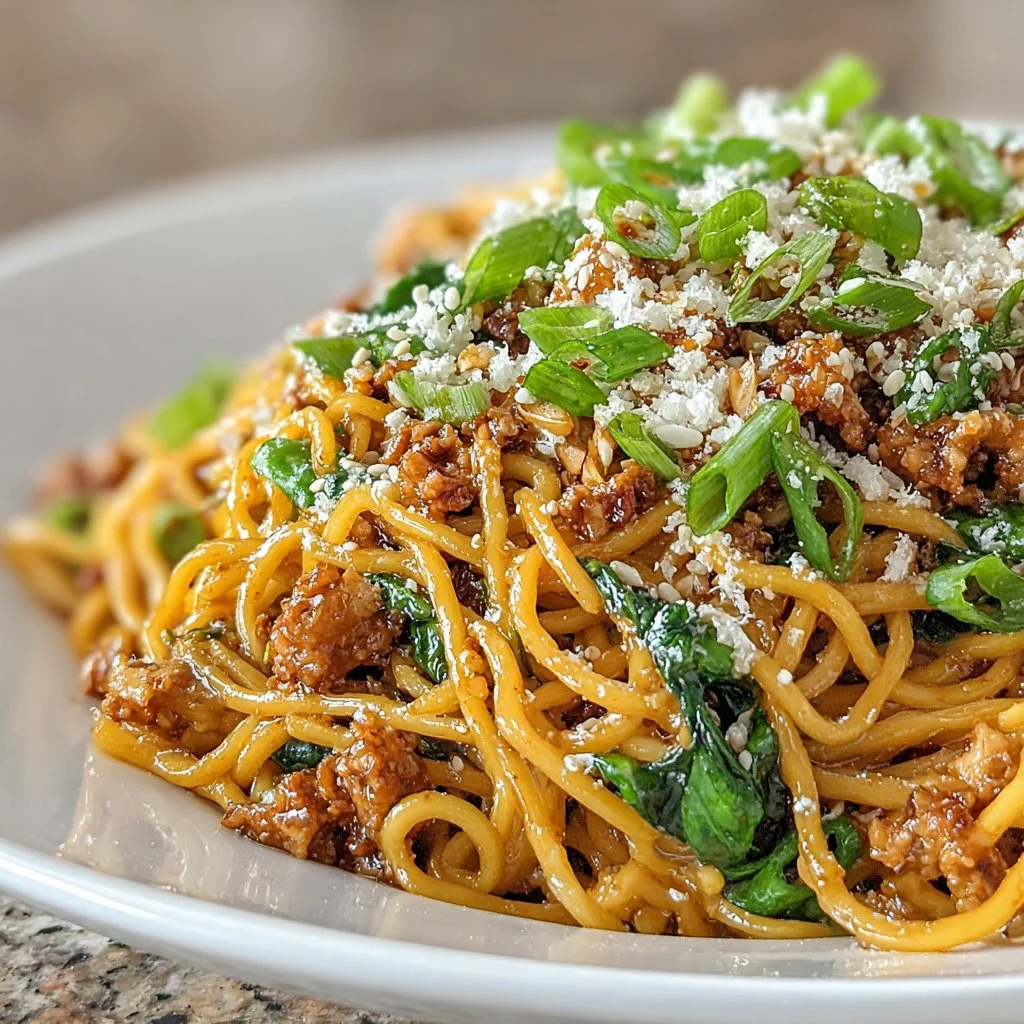
I still remember the first time I made these Szechuan (Dan Dan) noodles on a sleepy weeknight — a five-minute sauce, a quick sauté, and suddenly the whole kitchen smelled like takeout that cost three times as much. This recipe pares Dan Dan noodles down to what matters: spicy, savory sauce clinging to springy noodles, bright green onions, and a crisp pepper-sweet snap from snow peas. It’s fast, flexible, and perfect when you want bold Chinese flavors without a long ingredient list or complicated technique. If you like spicy, tangy noodles you can toss together in under 30 minutes, you’re in the right place — and yes, you can adapt it for vegetarian diners too. For a fun contrast of weeknight dishes, I sometimes pair this with a chewy crust from a quick homemade base like the no-yeast pizza dough I use for casual nights.
Why you’ll love this dish
Why make Dan Dan noodles at home instead of ordering in? Because they’re:
- Fast: Most of the work happens while the noodles cook — total time around 20–30 minutes.
- Budget-friendly: Dried noodles, a few pantry sauces, and seasonal snow peas make this an economical meal.
- Very flexible: Swap chicken broth for vegetable broth, or add ground pork or tofu for more protein.
- Big on flavor: A small amount of Szechuan chili paste delivers floral, numbing heat that stands up to the soy-hoisin backbone.
“A one-bowl wonder — bold, simple, and exactly the weeknight pick-me-up I needed.”
If you like experimenting with simple, ingredient-forward recipes, you might also enjoy a different kind of quick comfort like my favorite natural monjaro recipe for minimalist cooking — it’s a nice contrast in technique and flavor. Try that simple recipe next.
The cooking process explained
Before you start: this recipe follows a predictable flow so it’s easy to time everything.
- Cook the noodles until al dente and reserve a little cooking water.
- Whisk together the sauce — soy, rice vinegar, Szechuan chili paste, hoisin, sugar, and broth — so it’s ready to warm.
- Sauté the aromatics (ginger, garlic) quickly to release fragrance.
- Toss in snow peas just long enough to stay crisp-tender.
- Combine noodles and sauce off-heat or on low to let the sauce cling; finish with green onions and garnish.
This overview helps you stay organized: have the sauce in a bowl before you turn on the stove, drain the noodles quickly, and use the noodle water if you need to loosen the sauce.
What you’ll need
- 8 oz dried noodles (spaghetti or Chinese wheat noodles) — spaghetti works in a pinch; wheat noodles are closer to authentic texture.
- 2 tbsp vegetable oil (neutral oil like canola or peanut)
- 1 tbsp fresh ginger, minced
- 3 garlic cloves, minced
- 1/2 cup green onions, chopped (reserve some for garnish)
- 1/4 cup soy sauce (use low-sodium if you prefer)
- 2 tbsp rice vinegar
- 2 tbsp Szechuan chili paste or sauce (adjust to heat preference)
- 1 tbsp hoisin sauce
- 1 tsp sugar
- 1/2 cup chicken or vegetable broth (for vegetarian version, use veg broth)
- 1/2 cup snow peas, trimmed (sub: thinly sliced bell pepper or snap peas)
- Optional garnish: crushed peanuts or sesame seeds (adds crunch and richness)
Notes: If you don’t have Szechuan chili paste, mix chili garlic sauce with a dash of sesame oil and a pinch of sichuan peppercorn powder if available. Hoisin adds sweetness and body but you can use a little honey + soy as a substitute.
Step-by-step directions
- Cook the noodles: Bring a large pot of salted water to a boil. Add the noodles and cook until just al dente according to package directions. Reserve 1/4 cup of the noodle cooking water, then drain.
- Prepare the sauce: In a bowl whisk together soy sauce, rice vinegar, Szechuan chili paste, hoisin, sugar, and the broth until smooth.
- Sauté aromatics: Heat vegetable oil in a large skillet or wok over medium-high heat. Add minced ginger and garlic and stir for 20–30 seconds until fragrant (don’t let them burn).
- Cook the vegetables: Add the snow peas to the pan and stir-fry for 1–2 minutes until bright and crisp-tender.
- Combine noodles and sauce: Add the cooked noodles to the pan, pour the sauce over them, and toss quickly to combine. If the sauce seems thick or the noodles look dry, add a splash of reserved noodle water to loosen.
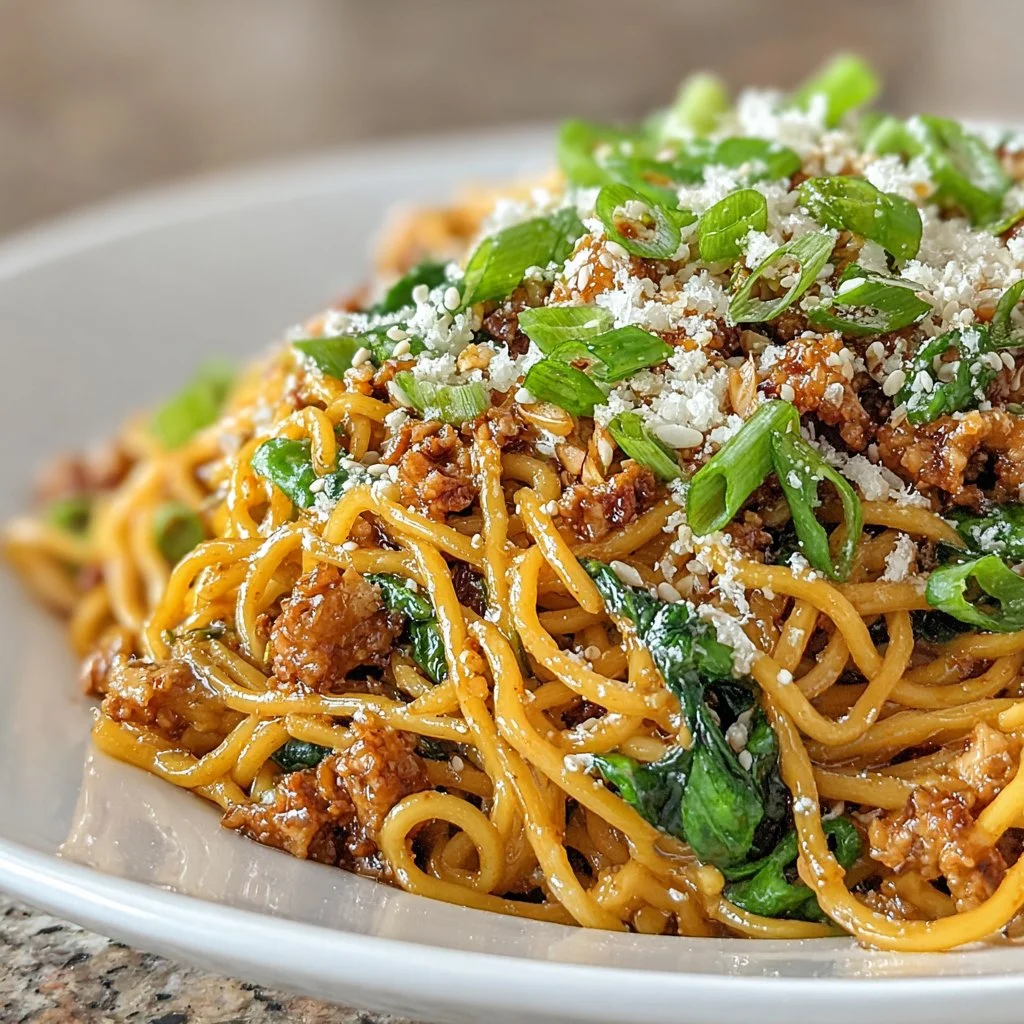
- Finish and serve: Turn off the heat, toss in most of the chopped green onions, and divide between bowls. Sprinkle crushed peanuts or sesame seeds and the remaining green onions on top. Serve immediately.
Keep steps short and decisive: high heat, quick tosses, and minimal time in the pan preserve noodle texture.
Best ways to enjoy it
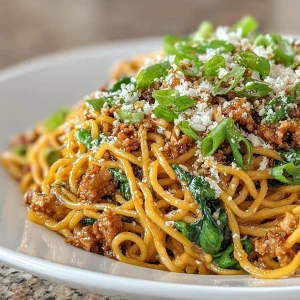
- Plating: Twirl a nest of noodles into shallow bowls so the sauce pools underneath, then top with green onions and peanuts for visual contrast.
- Sides: Serve with steamed bok choy, a simple cucumber salad, or potstickers for a more substantial meal.
- Drinks: A cold lager or jasmine tea balances the heat; for wine lovers, off-dry Riesling pairs nicely.
- Add-ins: Top with a soft-boiled egg, seared ground pork, or pan-fried tofu to turn it into a heartier main.
For a casual night in where you want complementary textures, consider pairing with simple homemade pizza — its chewy crust and neutral toppings make a fun contrast. This no-yeast pizza dough is my go-to when I want a quick bread side.
Storage and reheating tips
- Refrigerate: Store leftovers in an airtight container for up to 3 days. The noodles will soak up sauce and soften over time.
- Reheat: Warm gently in a skillet with a splash of water or broth to loosen the sauce. Microwave on medium power in 30-second bursts, stirring in between.
- Freeze: Not ideal — the texture degrades when frozen and thawed, so avoid freezing if you care about noodle texture.
- Safety: Cool leftovers within 2 hours and keep at 40°F (4°C) or below. Reheat to at least 165°F (74°C) before serving.
Helpful cooking tips
- Use hot water: Briefly rinse dried Chinese wheat noodles with hot water (if recommended on the package) to wake the gluten before boiling.
- Reserve noodle water: The starchy cooking water is a classic way to make the sauce silky without extra fat.
- Control heat: Start with 1–2 tablespoons of Szechuan paste and taste; paste brands vary widely in heat.
- Don’t overcook snow peas: They should be crisp-tender to provide contrast with the soft noodles.
- Aroma layering: Add most green onions off the heat to keep their fresh bite; add a few to the pan early for a milder, cooked flavor.
Creative twists
- Protein swaps: Stir in 8 oz ground pork cooked with a splash of soy and sugar, or add pan-fried tofu cubes for vegetarian protein.
- Nut butter sauce: For a creamier take, whisk 1–2 tbsp peanut or tahini into the sauce.
- Numbing spice: Toast and grind a small amount of Szechuan peppercorns for an authentic numbing note.
- Veg-forward: Add shredded carrots, thinly sliced cabbage, or blanched spinach for extra greens.
- Cooler version: Chill the noodles and toss with the sauce for a spicy cold noodle salad in summer.
Common questions
Q: Can I make this vegetarian or vegan? A: Yes. Use vegetable broth and omit animal proteins. Ensure your hoisin and chili paste are vegan (most are, but check labels). Add tofu or extra vegetables for added protein.
Q: What noodle should I use if I can’t find Chinese wheat noodles? A: Spaghetti or linguine are fine substitutions; they won’t be identical in texture but will absorb the sauce well. Fresh ramen or udon can also work with slight texture differences.
Q: How spicy is this dish — can I tone it down? A: Heat depends on your chili paste. Start with 1 tablespoon, taste, then add more. Balancing with a bit more hoisin or a pinch of sugar can tame excessive heat.
Q: Can I prep anything ahead of time? A: Yes — mince garlic and ginger, chop green onions, and mix the sauce up to a day ahead. Keep vegetables separate and cook them just before serving to retain texture.
Q: Is this safe to reheat more than once? A: No. Reheat only what you’ll eat and cool leftovers promptly. Reheating multiple times increases food-safety risk.
Conclusion
Homemade Szechuan (Dan Dan) noodles deliver bold flavor with minimal effort — a pantry-friendly weeknight winner that’s easy to adapt. For two excellent takes on classic Dan Dan techniques and inspiration for deeper authenticity, see Dan Dan Noodles: Authentic Sichuan Recipe – The Woks of Life and a clear, approachable home-cook version at Dan Dan Noodles (Spicy Sichuan noodles) – RecipeTin Eats.
Szechuan Dan Dan Noodles
Ingredients
For the Noodles
- 8 oz dried noodles (spaghetti or Chinese wheat noodles) Spaghetti works in a pinch; wheat noodles are closer to authentic texture.
For the Sauce
- 1/4 cup soy sauce Use low-sodium if you prefer.
- 2 tbsp rice vinegar
- 2 tbsp Szechuan chili paste or sauce Adjust to heat preference.
- 1 tbsp hoisin sauce
- 1 tsp sugar
- 1/2 cup chicken or vegetable broth For vegetarian version, use vegetable broth.
For the Aromatics and Vegetables
- 1 tbsp vegetable oil Neutral oil like canola or peanut.
- 1 tbsp fresh ginger, minced
- 3 cloves garlic, minced
- 1/2 cup green onions, chopped Reserve some for garnish.
- 1/2 cup snow peas, trimmed Sub: thinly sliced bell pepper or snap peas.
Optional Garnish
- to taste crushed peanuts or sesame seeds Adds crunch and richness.
Instructions
Cooking the Noodles
- Bring a large pot of salted water to a boil. Add the noodles and cook until just al dente according to package directions. Reserve 1/4 cup of the noodle cooking water, then drain.
Preparing the Sauce
- In a bowl whisk together soy sauce, rice vinegar, Szechuan chili paste, hoisin, sugar, and the broth until smooth.
Sauté Aromatics
- Heat vegetable oil in a large skillet or wok over medium-high heat. Add minced ginger and garlic and stir for 20–30 seconds until fragrant (don’t let them burn).
Cooking the Vegetables
- Add the snow peas to the pan and stir-fry for 1–2 minutes until bright and crisp-tender.
Combining Noodles and Sauce
- Add the cooked noodles to the pan, pour the sauce over them, and toss quickly to combine. If the sauce seems thick or the noodles look dry, add a splash of reserved noodle water to loosen.
Finishing and Serving
- Turn off the heat, toss in most of the chopped green onions, and divide between bowls. Sprinkle crushed peanuts or sesame seeds and the remaining green onions on top. Serve immediately.