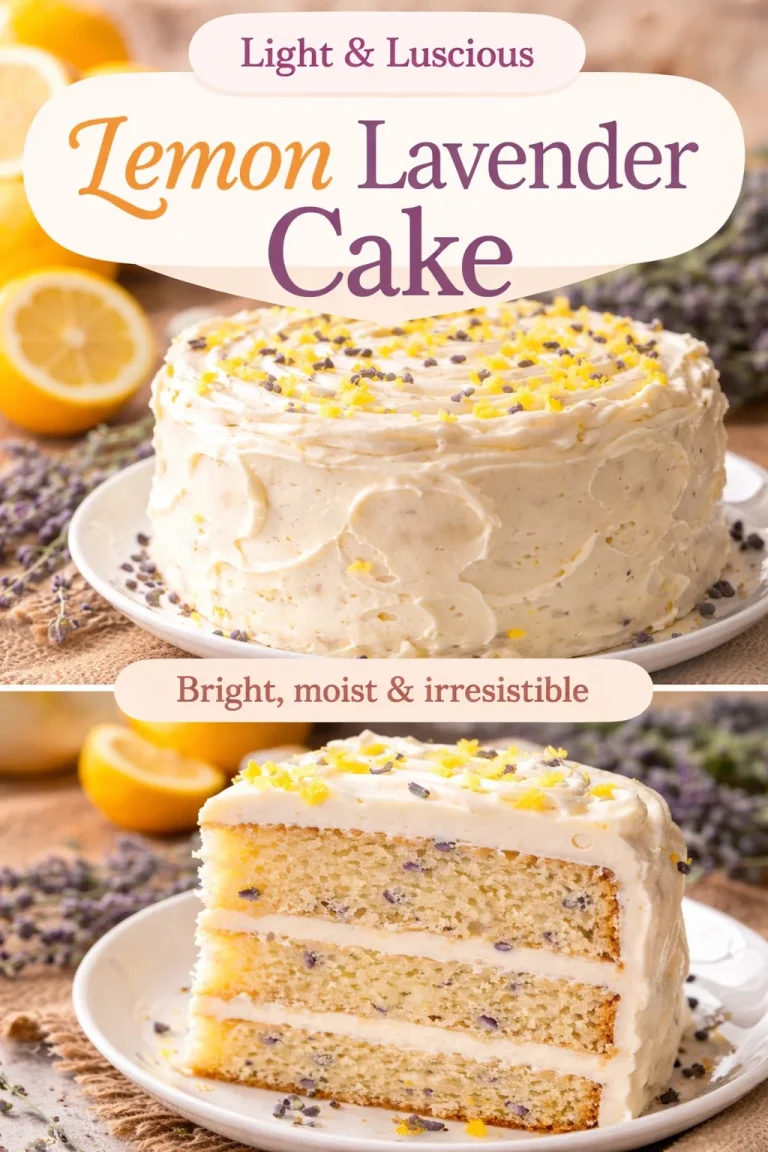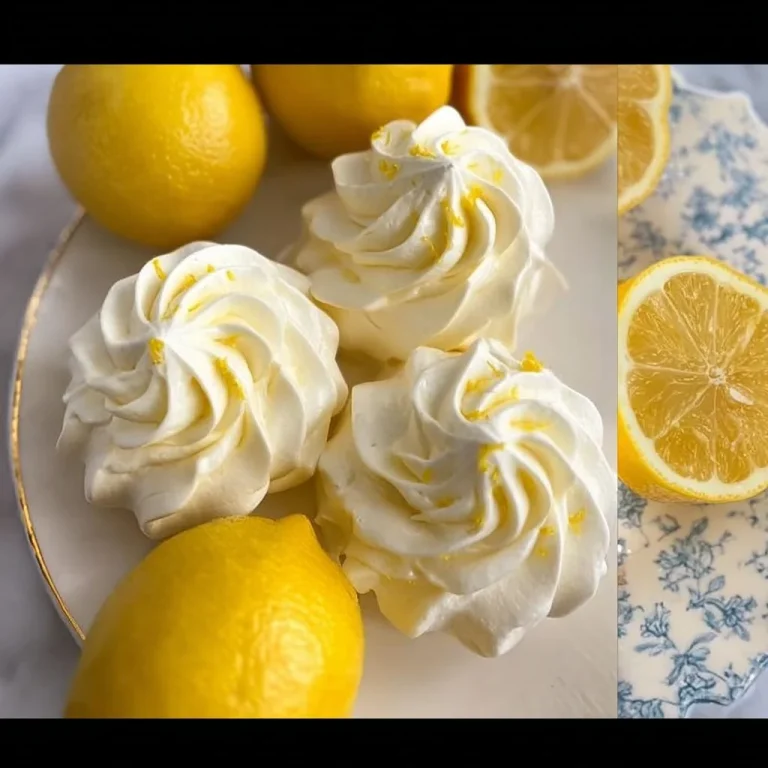
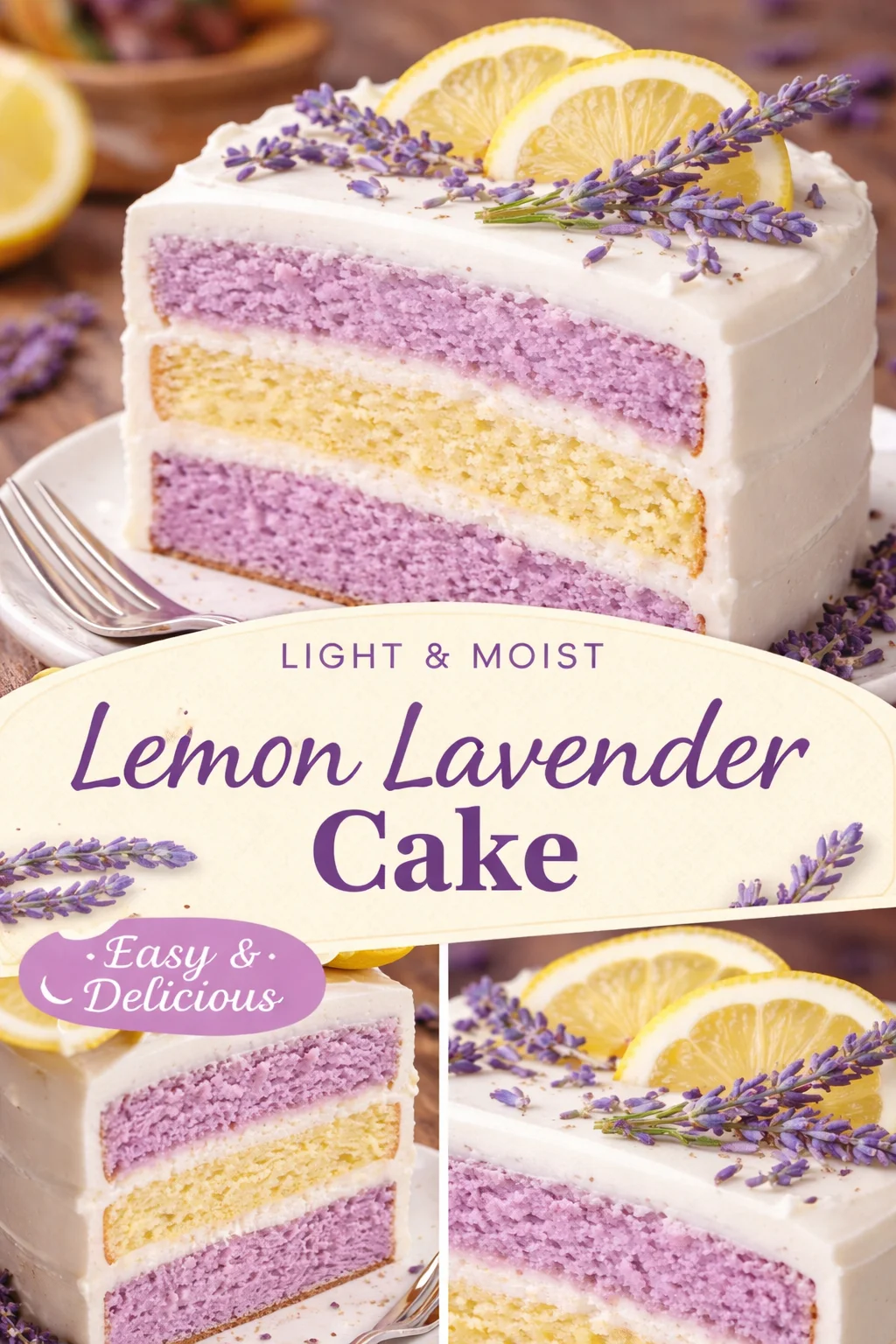
Lemon Lavender Cake

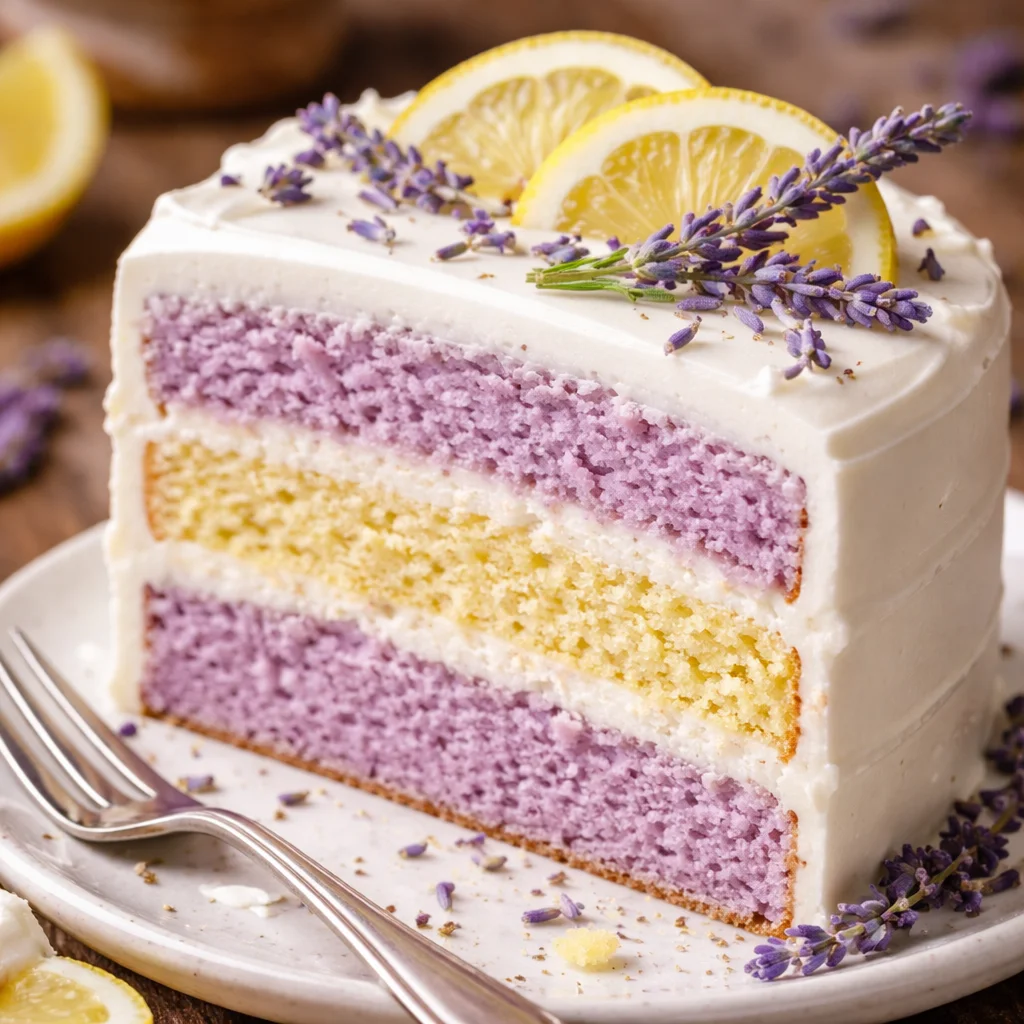
I first made this lemon lavender cake on a rainy Sunday, and it quickly became the cake I turn to when I want something bright but slightly nostalgic. It’s a tender, buttery layer cake where lemon’s citrus lift meets the floral, herbaceous whisper of culinary lavender—perfect for brunches, bridal showers, or an elegant afternoon tea. If you like cakes that feel homemade but look special, this one delivers.
Why you’ll love this dish
This cake balances citrus and floral flavors in a way that’s surprising but subtle. The lavender is steeped into warm milk so it flavors the batter without leaving gritty bits, while lemon zest and juice cut through the richness for a clean finish. It’s not overly sweet, making it great with coffee or a glass of chilled Prosecco. Because it uses pantry staples and only one step of infusing, it’s approachable for home bakers.
“Light, fragrant, and perfectly balanced — this cake tasted like spring on a plate.”
If you enjoy pairing lemon desserts with other floral sweets, try the honey lavender cheesecake (second version) for a contrasting texture and richer flavor.
Preparing Lemon Lavender Cake
Before you start, here’s a quick step-by-step overview so you know what to expect:
- Infuse dried culinary lavender into warm whole milk, then strain.
- Whisk dry ingredients separately.
- Cream butter and sugar, add eggs and lemon, then alternate dry mix with infused milk.
- Bake two 9-inch layers, cool completely.
- Make either a simple lemon-lavender glaze or a lemon buttercream that’s been lightly lavender-infused.
- Assemble, chill briefly, then serve.
This overview helps you work in batches: bowls for dry/wet, a pan for infusion, and time to cool before frosting.
What you’ll need
- 2 ½ cups all-purpose flour
- 2 teaspoons baking powder
- ½ teaspoon baking soda
- ½ teaspoon salt
- ½ cup unsalted butter (softened) — for the cake
- 1 ½ cups granulated sugar
- 3 large eggs
- 1 tablespoon finely grated lemon zest (about 2 lemons)
- ¼ cup fresh lemon juice
- 1 cup whole milk
- 2 tablespoons dried lavender buds (culinary grade) — use food-grade only
- 1 teaspoon vanilla extract
For the Lemon Lavender Glaze:
- 1 ½ cups powdered sugar
- 2 tablespoons fresh lemon juice
- 1 tablespoon lemon zest
- 1 tablespoon dried lavender buds (culinary grade) — finely crushed
For the Lemon Buttercream Frosting:
- ½ cup unsalted butter (softened) — for buttercream
- 4 cups powdered sugar
- 2 tablespoons heavy cream
- 2 tablespoons fresh lemon juice
- 1 tablespoon lemon zest
- 1 tablespoon dried lavender buds (culinary grade) — lightly crushed
- Pinch of salt
Notes/substitutions:
- Swap whole milk for 2% if needed, but avoid skim for best crumb.
- For a dairy-free version, use neutral oil and a plant-based milk; texture will differ.
- If you’re nervous about lavender strength, reduce the lavender to 1 tablespoon total between batter and frosting.
How this recipe comes together
- Preheat the oven to 350°F (175°C). Grease and flour two 9-inch round pans or line them with parchment; set aside.
- Infuse the lavender: warm the milk over low heat until steaming (don’t boil). Remove from heat, add 2 tablespoons dried lavender, cover, and steep for 5 minutes. Cool to room temperature, then strain through fine mesh, pressing gently to extract liquid. Discard solids.
- Whisk dry ingredients: combine flour, baking powder, baking soda, and salt in a medium bowl. Set aside.
- Cream butter and sugar: in a large bowl, beat ½ cup softened butter with 1 ½ cups granulated sugar on medium speed until pale and fluffy, about 3–4 minutes.
- Add eggs and citrus: add eggs one at a time, mixing well after each. Stir in 1 tablespoon lemon zest, ¼ cup lemon juice, and 1 teaspoon vanilla.
- Combine wet and dry: add dry ingredients to butter mixture in three additions, alternating with the lavender-infused milk (start and end with dry). Mix just until combined—overmixing will toughen the crumb.
- Bake: divide batter evenly between pans and smooth tops. Bake 25–30 minutes until a toothpick comes out clean or with a few moist crumbs.
- Cool: cool in pans 10 minutes, then turn out onto a wire rack to cool completely before frosting.
For a quick glaze: whisk 1 ½ cups powdered sugar with 2 tablespoons lemon juice, 1 tablespoon lemon zest and 1 tablespoon very finely crushed lavender until smooth; drizzle over cooled layers.
For buttercream: gently crush 1 tablespoon dried lavender (don’t pulverize to dust). Beat ½ cup softened butter until creamy, gradually add 4 cups powdered sugar, then add 2 tablespoons heavy cream, 2 tablespoons lemon juice, lemon zest and crushed lavender, plus a pinch of salt. Adjust consistency with more cream or sugar. Chill briefly if too soft.
If you want texture or a complementary dessert, see tips inspired by the honey lavender cheesecake recipe for pairing notes.
Directions to follow
- Prep timeline: infuse milk first (about 10–15 minutes including cooling), then measure and mix dry ingredients while butter softens.
- Batter handling: fold gently; scrape the bowl to ensure even mixing.
- Baking cues: look for golden edges and a springy top. Larger ovens run hot—start checking at 22 minutes.
- Frosting assembly: if using buttercream, chill the layers for 15–20 minutes for cleaner edges. For a softer finish, use the glaze and let it set at room temperature.
A few practical points: always cool cakes completely before frosting; warm cake will melt icing and make a mess. For even layers, weigh batter into pans.
What to serve it with
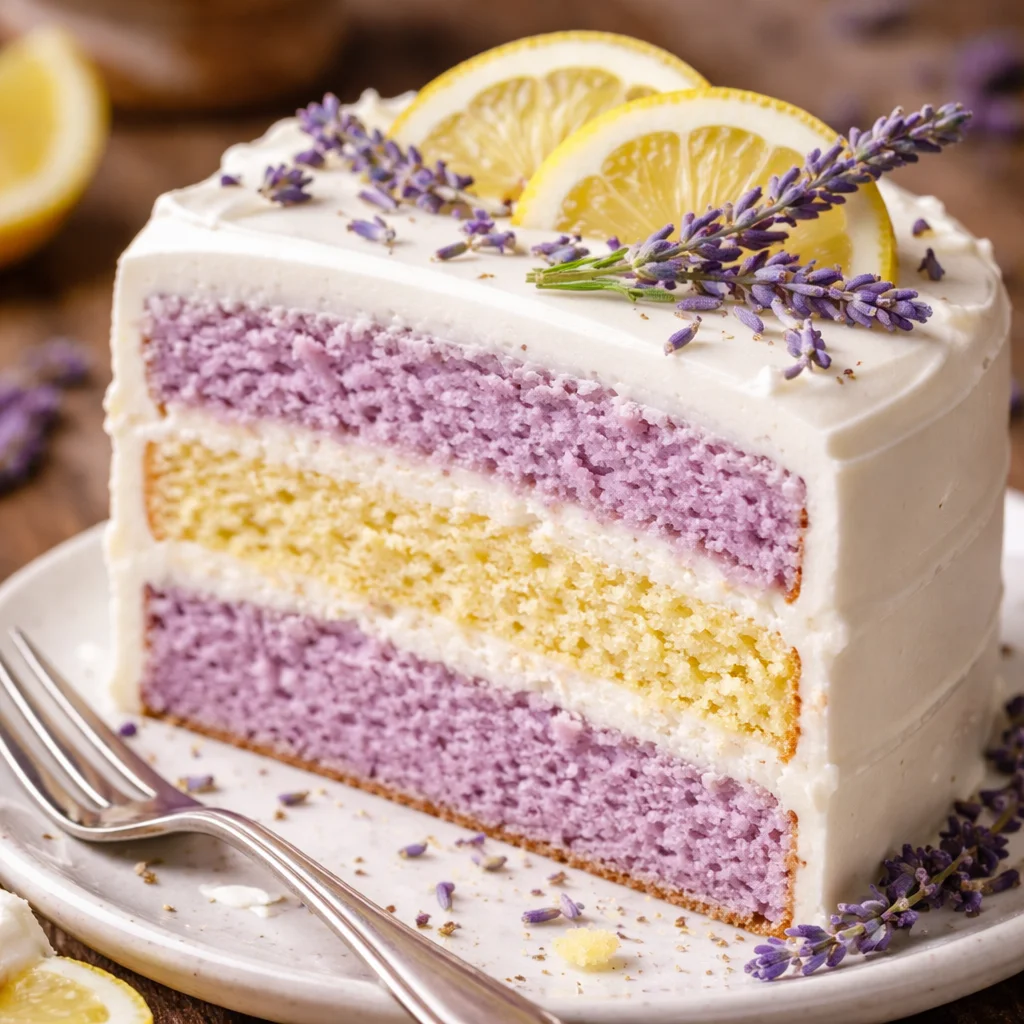
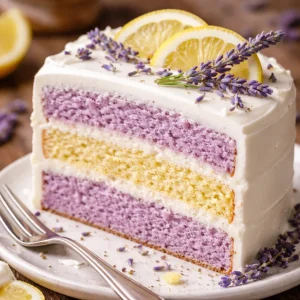
- A simple garnish: a few lemon slices and a sprinkle of dried lavender (sparingly) on top.
- Drink pairings: Earl Grey tea or a citrus-forward white wine; for kids, a lemon-ginger iced tea works well.
- Sides: fresh berries or lightly sweetened mascarpone are lovely on the side.
- For a dessert spread: serve thin slices alongside mini scones or the honey lavender cheesecake for complementary floral notes.
Storage and reheating tips
- Room temp: store unfrosted layers wrapped in plastic wrap at room temperature for up to 24 hours. Frosted cake keeps at room temp (covered) for 1–2 days.
- Refrigeration: store frosted cake in an airtight container in the fridge for up to 5 days. Bring to room temperature before serving for best flavor (30–60 minutes).
- Freezing: freeze unfrosted layers double-wrapped for up to 3 months. Thaw in the fridge overnight, then bring to room temp before frosting.
- Food safety: because this contains eggs and dairy, keep it refrigerated if not eaten within a day in warm climates.
Pro chef tips
- Use finely grated lemon zest (microplane) for an even burst of citrus. Avoid the white pith.
- Smash lavender between your fingers or a mortar and pestle to release aroma, but don’t overdo it; too much lavender tastes soapy.
- Measure flour by spooning into the cup and leveling—don’t scoop directly; that prevents a dense cake.
- For extra lemon brightness, brush each layer lightly with a mixture of 1 tablespoon lemon juice and 1 teaspoon sugar before frosting.
- If you want a smoother finish with buttercream, chill the frosted cake briefly and smooth again with an offset spatula.
Creative twists
- Lemon-lavender bundt: bake in a bundt pan and pour the glaze while the cake is warm for a glossy finish.
- Honey swap: replace 1/4 cup granulated sugar with 1/4 cup honey for a deeper flavor (reduce liquid slightly).
- Lavender shortbread crumble: top slices with a crunchy lavender shortbread crumble for texture.
- Vegan adaptation: use neutral oil, flax eggs, and vegan butter for frosting—expect a moister crumb and slightly different mouthfeel.
- Boozy glaze: add 1–2 tablespoons Limoncello to the glaze for an adult twist.
Helpful answers
Q: Can I use fresh lavender instead of dried?
A: Use dried culinary-grade lavender for consistent flavor. Fresh lavender has more water and can alter texture; if you must use fresh, double the amount and pat dry, but reduce steep time.
Q: How strong will the lavender taste be?
A: Properly measured (2 tbsp in milk + 1 tbsp in frosting) it should be a gentle floral note, not perfumy. If you’re new to lavender, start with 1 tbsp total and taste as you go.
Q: Can I make this ahead for a party?
A: Yes. Bake layers a day ahead and store wrapped at room temp. Make buttercream the day of or the night before and refrigerate; bring to room temp before using. Assemble on the day for freshest texture.
Q: My cake is dense—what went wrong?
A: Likely overmeasuring flour or overmixing. Use the spoon-and-level flour method and mix until just combined when adding dry ingredients.
Q: Is culinary lavender the same as decorative lavender?
A: No. Only use culinary-grade lavender; decorative varieties may be treated with pesticides or have a different flavor profile.
Conclusion
If you want a tested lemon lavender cake with clear techniques for infusion, crumb, and frosting, this recipe is a great place to start. For another take on the flavor combo and presentation inspiration, check out this lovely Lemon Lavender Cake Recipe – Sugar & Sparrow, and for additional method notes and variations, this Lemon Lavender Cake Recipe guide from Simply Recipes has excellent tips.
Lemon Lavender Cake
Ingredients
For the cake
- 2.5 cups all-purpose flour
- 2 teaspoons baking powder
- 0.5 teaspoon baking soda
- 0.5 teaspoon salt
- 0.5 cup unsalted butter (softened)
- 1.5 cups granulated sugar
- 3 large eggs
- 1 tablespoon finely grated lemon zest (about 2 lemons)
- 0.25 cup fresh lemon juice
- 1 cup whole milk
- 2 tablespoons dried lavender buds (culinary grade) use food-grade only
- 1 teaspoon vanilla extract
For the Lemon Lavender Glaze
- 1.5 cups powdered sugar
- 2 tablespoons fresh lemon juice
- 1 tablespoon lemon zest
- 1 tablespoon dried lavender buds (culinary grade) finely crushed
For the Lemon Buttercream Frosting
- 0.5 cup unsalted butter (softened) for buttercream
- 4 cups powdered sugar
- 2 tablespoons heavy cream
- 2 tablespoons fresh lemon juice
- 1 tablespoon lemon zest
- 1 tablespoon dried lavender buds (culinary grade) lightly crushed
- 1 pinch salt
Instructions
Preparation
- Preheat the oven to 350°F (175°C). Grease and flour two 9-inch round pans or line them with parchment; set aside.
- Infuse the lavender: warm the milk over low heat until steaming (don’t boil). Remove from heat, add 2 tablespoons dried lavender, cover, and steep for 5 minutes. Cool to room temperature, then strain through fine mesh, pressing gently to extract liquid. Discard solids.
- Whisk dry ingredients: combine flour, baking powder, baking soda, and salt in a medium bowl. Set aside.
- Cream butter and sugar: in a large bowl, beat ½ cup softened butter with 1 ½ cups granulated sugar on medium speed until pale and fluffy, about 3–4 minutes.
- Add eggs and citrus: add eggs one at a time, mixing well after each. Stir in 1 tablespoon lemon zest, ¼ cup lemon juice, and 1 teaspoon vanilla.
- Combine wet and dry: add dry ingredients to butter mixture in three additions, alternating with the lavender-infused milk (start and end with dry). Mix just until combined—overmixing will toughen the crumb.
- Bake: divide batter evenly between pans and smooth tops. Bake 25–30 minutes until a toothpick comes out clean or with a few moist crumbs.
- Cool: cool in pans for 10 minutes, then turn out onto a wire rack to cool completely before frosting.
Glazing/Frosting
- For a quick glaze: whisk 1 ½ cups powdered sugar with 2 tablespoons lemon juice, 1 tablespoon lemon zest and 1 tablespoon very finely crushed lavender until smooth; drizzle over cooled layers.
- For buttercream: gently crush 1 tablespoon dried lavender (don’t pulverize to dust). Beat ½ cup softened butter until creamy, gradually add 4 cups powdered sugar, then add 2 tablespoons heavy cream, 2 tablespoons lemon juice, lemon zest and crushed lavender, plus a pinch of salt. Adjust consistency with more cream or sugar. Chill briefly if too soft.