Toasted Oat Graham Crackers {Vegan & Gluten-Free}

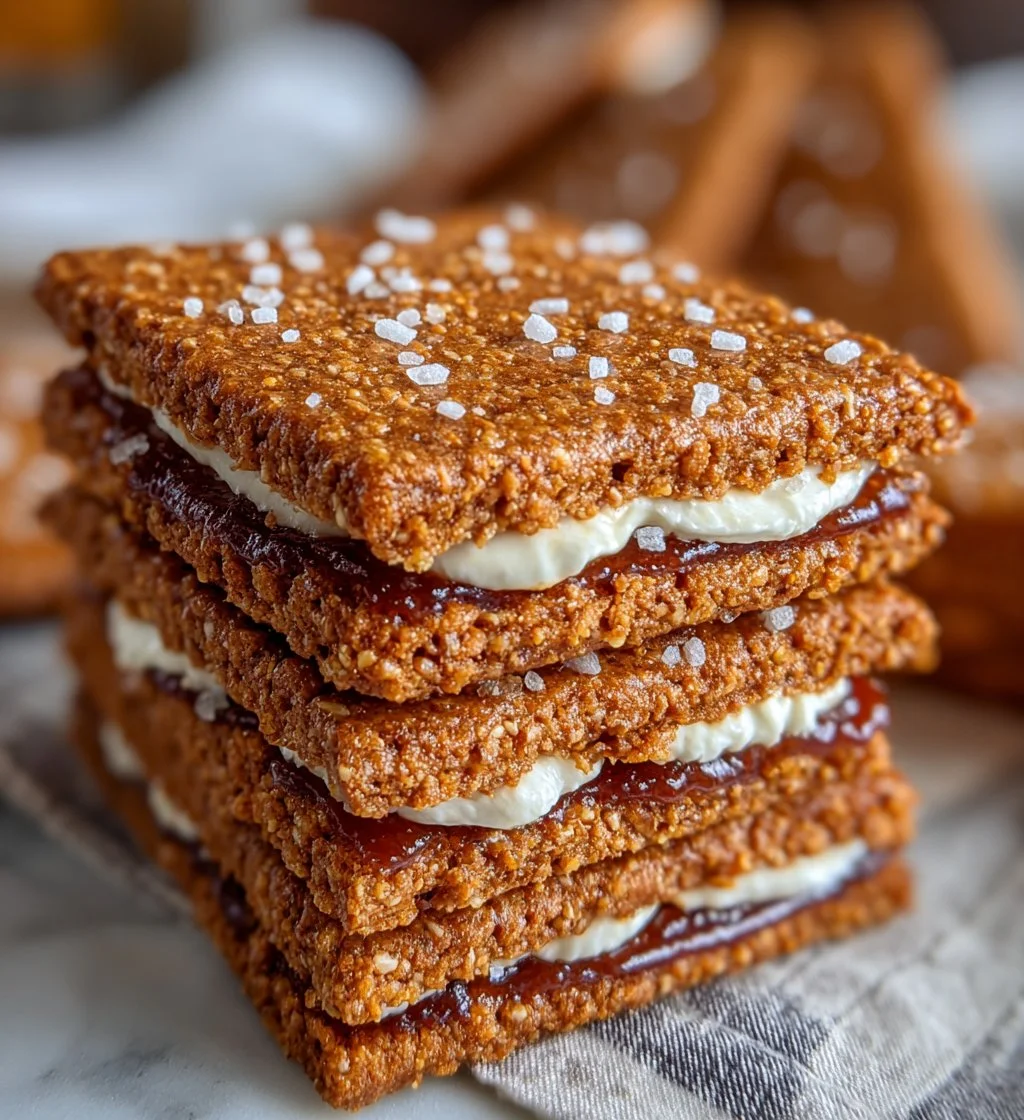
I still remember the first batch of these toasted oat graham crackers: nutty aroma filling the kitchen, a satisfying snap, and that warm molasses-cinnamon backbone that makes them crave-worthy. These are homemade, vegan, and gluten-free graham crackers made from toasted oats (processed into oat flour) for extra depth of flavor — perfect for s’mores, snack boxes, or a smart baking project when you want control over ingredients and texture. If you like a crunchy, slightly chewy cracker with honest pantry flavors, this is the recipe to try. For a savory-sweet snack board idea, I often pair them with a tangy cheese or spread inspired by a favorite sandwich riff I once made savory sandwich inspiration.
Why you’ll love this dish
These crackers deliver big on flavor with straightforward pantry ingredients. Toasting the oats deepens the flavor so the crackers read as “graham” even without wheat or dairy. They’re also:
- Vegan and naturally free of eggs and dairy.
- Gluten-free when you start with certified gluten-free oats.
- Budget-friendly: oats and pantry staples, no specialty flours required.
- Versatile: snack, s’mores, crumbs for crusts, or dunkers for your latte.
“Crunchy, brown-sugar warmth in every bite — better than the store brand and so much kinder to my food sensitivities.” — a home baker’s note
If you enjoy oat-forward baking, try pairing the texture ideas with other oat treats like a classic take on chewy cookies; for more oat-based baking ideas, see this roundup of crowd-pleasing recipes best oatmeal-raisin cookies.
How this recipe comes together
This recipe follows a simple flow so you can scan before you start:
- Toast whole oats until fragrant, then grind into oat flour for a warm, nutty base.
- Whisk dry ingredients (oat flour, starch, sugar, spices).
- Cut in coconut oil (or neutral oil) and add molasses + non-dairy milk to form a pliable dough.
- Chill briefly so the dough rolls thin without sticking.
- Roll between parchment, dock, cut, and bake until edges brown lightly.
- Cool fully so crackers crisp up.
If you’ve made oat bars or pressed oat dough before, the dough handling is similar — think of this like a thin, crisp bar that you roll and slice: banana oat bar technique.
What you’ll need
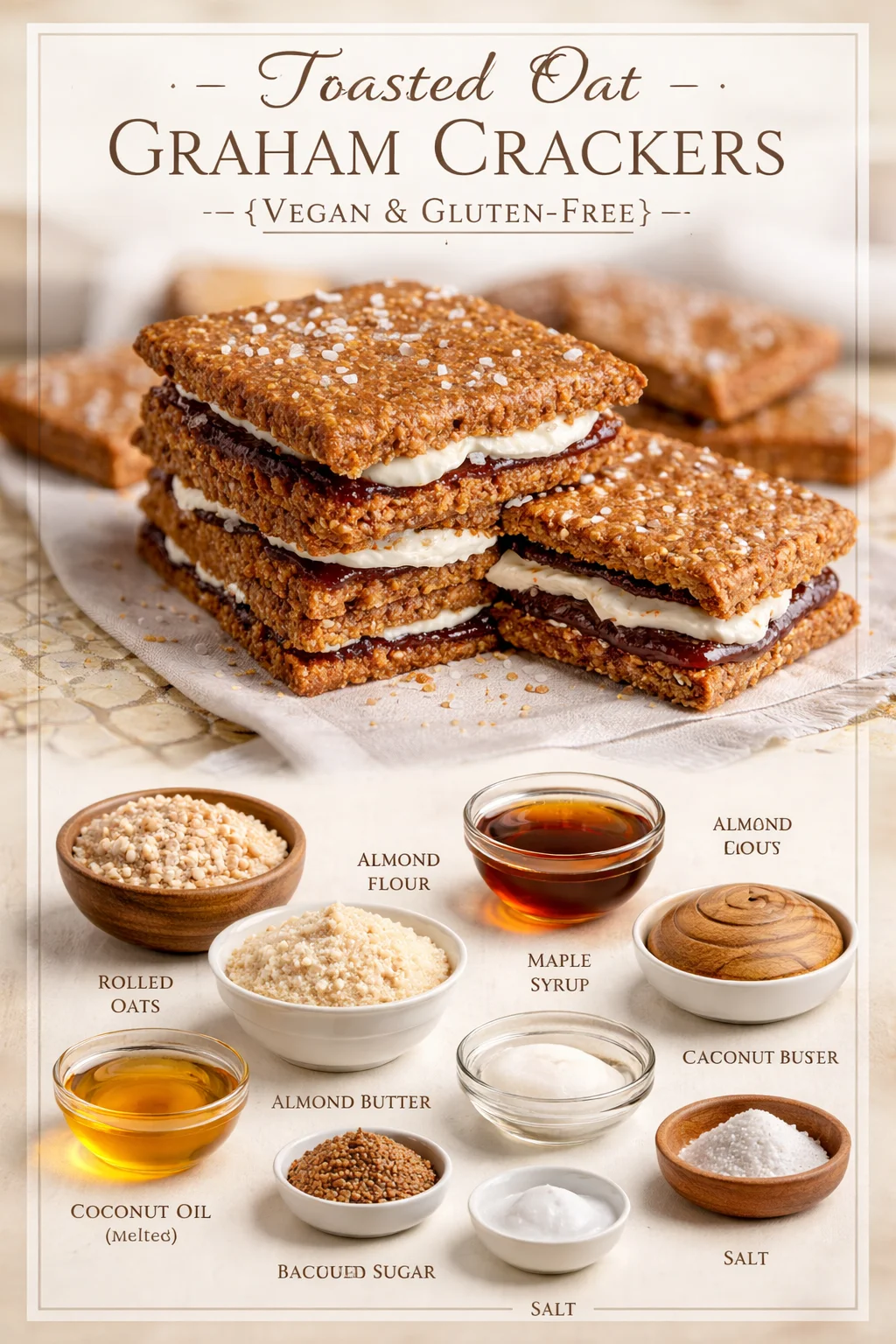
- 2 cups rolled oats, toasted (to be processed into flour)
- 3/4 cup oat flour (if not making all from toasted oats)
- 1/2 cup brown sugar (packed) or coconut sugar
- 1/4 cup tapioca starch or cornstarch (adds crispness)
- 1 tsp baking powder
- 1 tsp ground cinnamon
- 1/2 tsp fine sea salt
- 3 tbsp molasses (for that classic graham flavor)
- 1/4 cup coconut oil, solid (or neutral oil)
- 3–4 tbsp unsweetened non-dairy milk (almond, oat, soy) to bring dough together
- 1 tsp vanilla extract
- Optional: 1–2 tbsp ground flax + 3–4 tbsp water (as a binder if you want extra chew)
Notes: Toasting the oats before grinding brings caramelized flavor; if you prefer an even finer crumb, pulse longer in a food processor. If you want autumn spice notes, you can add a pinch of ginger or nutmeg similar to fall-forward recipes that use warming spices for seasonal inspiration.
How to prepare it
- Toast and grind: Spread rolled oats on a baking sheet and toast at 350°F (175°C) for 8–12 minutes until fragrant and lightly golden. Let cool, then pulse in a food processor to a fine flour.
- Mix dry: In a bowl, whisk oat flour, additional oat flour if using, tapioca starch, brown sugar, baking powder, cinnamon, and salt.
- Cut in fat: Add solid coconut oil and rub it into the dry mix with your fingertips or use a pastry cutter until the mixture looks like coarse crumbs.
- Add liquids: Stir in molasses and vanilla. Add non-dairy milk 1 tablespoon at a time until a slightly stiff dough forms. If using, add flax “egg” now.
- Chill: Shape dough into a disk, wrap, and chill 20–30 minutes to firm up.
- Roll thin: Place dough between two sheets of parchment and roll to about 1/8-inch thickness. If you prefer very crisp crackers, roll slightly thinner.
- Cut and dock: Remove top parchment, cut into rectangles with a pizza cutter or knife, then poke holes with a fork (docking) to prevent puffing.
- Bake: Transfer parchment to a baking sheet and bake at 350°F (175°C) for 10–14 minutes, until edges are golden. Rotate pans once for even color.
- Cool: Let crackers cool completely on a wire rack; they will crisp as they cool.
How to serve Toasted Oat Graham Crackers {Vegan & Gluten-Free}
- Classic: Spread with vegan butter and honey or jam for a nostalgic bite.
- S’mores: Use vegan marshmallows and dark chocolate for a campfire-style treat.
- Dessert base: Crush into crumbs for cheesecakes or pie crusts.
- Snack box: Pair with nut butter, apple slices, or a creamy plant-based cheese.
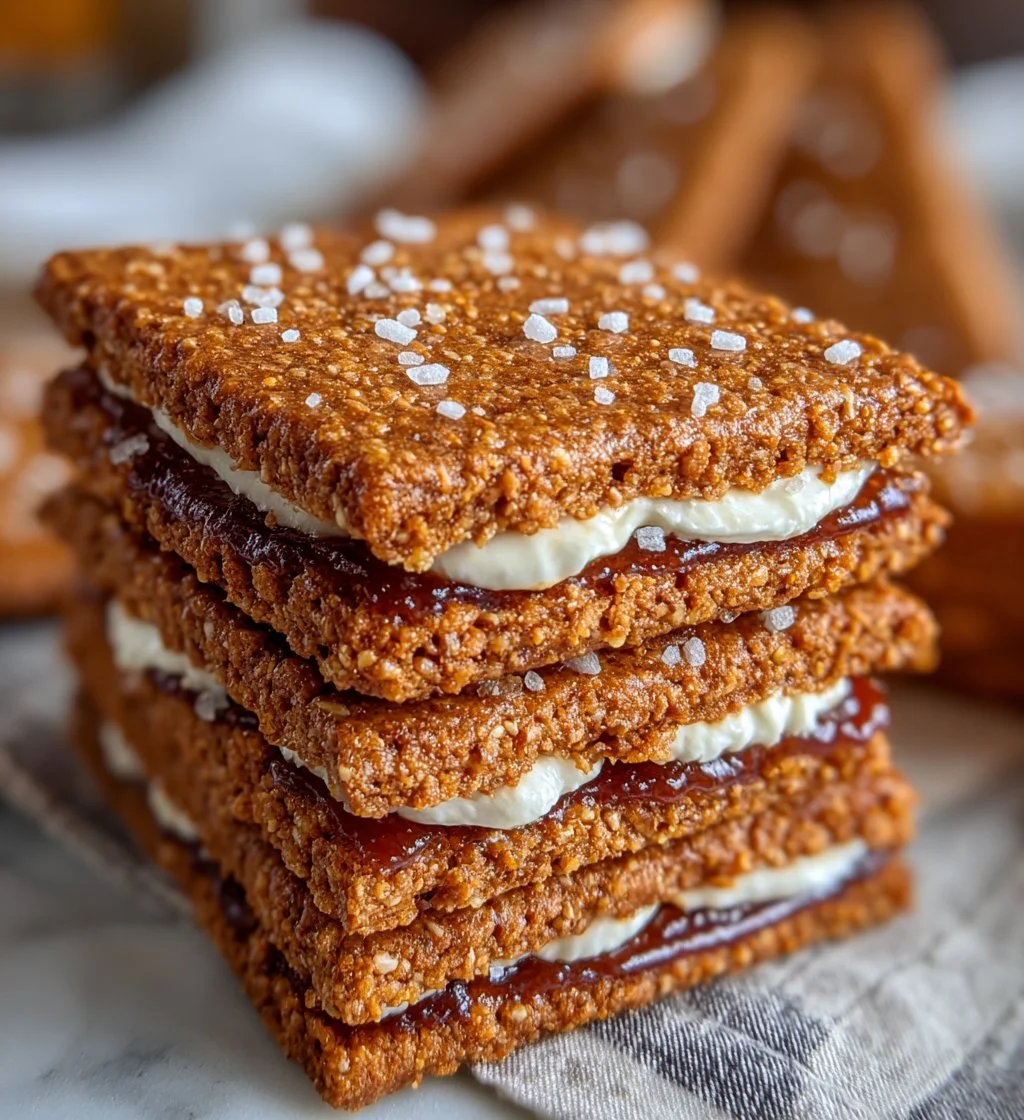
- Plating: Stack 4–6 by flavor, garnish with a cinnamon dusting and small ramekin of molasses cream for dipping.
Storage and reheating tips
- Room temp: Store cooled crackers in an airtight container at room temperature for up to 5 days. Add a piece of bread or a sugar cube to maintain the right moisture level (bread keeps them softer; sugar cube keeps them drier).
- Freezing: Layer between parchment in a freezer-safe bag for up to 3 months. Thaw at room temperature; re-crisp briefly in a 325°F (160°C) oven for 3–5 minutes.
- Safety: Because these are low-moisture baked goods, refrigeration isn’t necessary and can introduce humidity that softens them. Always cool completely before storing to prevent condensation.
Pro chef tips
- Toast for flavor: Don’t skip toasting the oats — it’s the single biggest flavor multiplier here.
- Grind twice: Pulse, rest, then pulse again in the food processor for the finest oat flour without overheating the motor.
- Keep it cold: If the dough feels soft while rolling, chill it again; a cold dough rolls thinner and cleaner.
- Uniform thickness: Roll between two identical sheets of parchment and use rolling pin guides (rulers or dowels) to get consistent crackers.
- Molasses balance: Start with the lower amount if you prefer a milder flavor; molasses can dominate quickly.
- Quick sheet swap: Bake one tray at a time for the most even browning.
For more tips on working with oats and toasting methods that make rustic desserts sing, check this step-by-step guide to oat-focused baking oatellated baking techniques.
Creative twists
- Cinnamon sugar: Brush lightly with melted coconut oil and sprinkle cinnamon sugar right after baking for a glazed finish.
- Chocolate-dipped: Dip half the cracker in melted vegan chocolate and chill until set.
- Nutty: Add 1/4 cup finely ground almonds or hazelnuts for extra richness.
- Citrus zest: Stir 1 tsp finely grated orange zest into the dough for a bright lift.
- Savory version: Omit the molasses and brown sugar, add herbs and Parmesan-style nutritional yeast for a savory cracker.
Your questions answered
Q: Can I use store-bought oat flour instead of toasting oats?
A: Yes. Store-bought oat flour works — but toasting rolled oats yourself gives a deeper, toasty flavor you can’t get from raw flour. If using pre-made oat flour, you can gently toast it in a dry skillet for a minute or two, watching closely so it doesn’t burn.
Q: Are certified gluten-free oats necessary?
A: If you need the crackers to be gluten-free for medical reasons, use certified gluten-free oats. Regular oats can be cross-contaminated with wheat during processing.
Q: My crackers stayed soft. What went wrong?
A: Common causes: dough rolled too thick, not baked long enough, or stored while still warm (causing trapped moisture). Roll thinner, bake until edges show light browning, and cool completely before storing.
Q: Can I make these nut-free?
A: Absolutely—this recipe is naturally nut-free if you don’t add nut flours or toppings. Use coconut oil or a neutral oil instead of nut oils.
Q: How crisp will they be for s’mores?
A: They crisp up as they cool and hold up well as s’mores crackers; for extra rigidity, bake slightly longer at a slightly lower temp (e.g., 325°F) until golden.
Conclusion
If you want the original source and a close inspiration for this vegan, gluten-free version, see the original recipe write-up at Toasted Oat Graham Crackers {Vegan & Gluten-Free}. For an alternate oat-based graham cracker approach with a focus on cinnamon and texture, Fran Costigan’s version is a helpful reference: Vegan Cinnamon Oat Graham Crackers – Fran Costigan.
Toasted Oat Graham Crackers
Ingredients
Cracker Ingredients
- 2 cups rolled oats, toasted To be processed into flour
- 3/4 cup oat flour If not making all from toasted oats
- 1/2 cup brown sugar (packed) or coconut sugar For sweetness
- 1/4 cup tapioca starch or cornstarch Adds crispness
- 1 tsp baking powder For leavening
- 1 tsp ground cinnamon For flavor
- 1/2 tsp fine sea salt Enhances flavor
- 3 tbsp molasses For classic graham flavor
- 1/4 cup coconut oil, solid (or neutral oil) For fat content
- 3-4 tbsp unsweetened non-dairy milk To bring dough together (almond, oat, soy)
- 1 tsp vanilla extract For flavor
- 1-2 tbsp ground flax Optional: as a binder for extra chew
- 3-4 tbsp water Optional: to mix with flax
Instructions
Preparation
- Toast rolled oats on a baking sheet at 350°F (175°C) for 8–12 minutes until fragrant and lightly golden. Let cool, then grind in a food processor to a fine flour.
- In a bowl, whisk together oat flour, additional oat flour if using, tapioca starch, brown sugar, baking powder, cinnamon, and salt.
- Add solid coconut oil and rub it into the dry mix with your fingertips or use a pastry cutter until the mixture looks like coarse crumbs.
- Stir in molasses and vanilla. Add non-dairy milk 1 tablespoon at a time until a slightly stiff dough forms. If using, add flax 'egg' now.
- Shape dough into a disk, wrap, and chill for 20–30 minutes to firm up.
Rolling and Baking
- Place chilled dough between two sheets of parchment and roll to about 1/8-inch thickness.
- Remove top parchment, cut into rectangles with a pizza cutter or knife, then poke holes with a fork to prevent puffing.
- Transfer parchment to a baking sheet and bake at 350°F (175°C) for 10–14 minutes, until edges are golden. Rotate pans once for even color.
- Let crackers cool completely on a wire rack; they will crisp as they cool.