Snickerdoodle Cookies
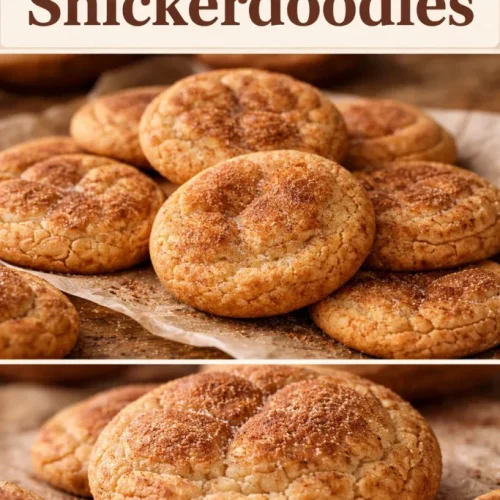
Soft and slightly chewy cookies with crisp cinnamon-edged rims and a tangy hint from cream of tartar, perfect for any occasion.
Ingredients
Dry Ingredients
- 2 3/4 cups all-purpose flour (spooned and leveled; for slightly chewier cookies, replace 1/4 cup with bread flour) Spoon flour into the cup and level it.
- 1 teaspoon baking soda This helps the cookies rise.
- 1/2 teaspoon cream of tartar Essential for traditional tang and texture.
- 1/2 teaspoon salt Enhances the overall flavor.
Wet Ingredients
- 1 cup unsalted butter, softened (do not melt) Should be soft, not greasy.
- 1 1/2 cups granulated sugar For sweetness.
- 1/4 cup packed brown sugar Adds depth and moisture.
- 2 large eggs, room temperature Should be at room temperature for better incorporation.
- 2 teaspoons vanilla extract For flavor.
For Rolling
- 2 tablespoons granulated sugar For rolling.
- 1 tablespoon ground cinnamon For rolling.
Instructions
Preparation
- Preheat the oven to 350°F (175°C). Line baking sheets with parchment paper or use ungreased pans.
- Whisk the flour, baking soda, cream of tartar, and salt in a medium bowl until combined.
- In a large bowl, beat the softened butter with the granulated sugar and brown sugar until smooth and slightly fluffy, about 2–3 minutes.
- Add the eggs one at a time, beating after each addition. Stir in the vanilla.
- Gradually add the dry ingredients to the wet mixture. Mix until just combined — don’t overmix.
Baking
- In a small bowl, combine 2 tablespoons granulated sugar with 1 tablespoon ground cinnamon.
- Scoop or roll dough into 1–1.5 tablespoon-sized balls, then roll each ball in the cinnamon-sugar until fully coated.
- Place the coated dough balls on the baking sheets, spacing them about 2 inches apart.
- Bake 8 to 10 minutes. Look for lightly golden edges and a set surface; centers will still be soft.
- Let cookies cool on the baking sheet for 2–3 minutes, then transfer to wire racks to cool completely.
Notes
For a dairy-free version, use a vegan stick butter substitute and an extra tablespoon of oil; texture will vary. For a gluten-free option, use a 1:1 measure of a cup-for-cup gluten-free flour blend but know the chew will be slightly different.